Finding the right microphone for wind and brass instruments involves understanding how different systems capture sound across various musical settings. Whether you are performing on stage, recording in a studio, practicing at home, or teaching students, selecting a specialized clip-on or wireless microphone ensures your instrument projects clearly. Musicians often look for reliable connectivity, secure mounting options, and clear voice reproduction to match their specific performance requirements.
This comprehensive guide explores a diverse selection of instrument microphones designed for flutes, brass instruments, and mobile recording environments. By examining the unique attributes of each system, including wireless range, connector types, and specialized clip designs, you can determine which microphone setup aligns best with your musical style, practice routine, and live performance needs.
1. 2.4G Saxophone System
Best for brass players seeking low latency wireless transmission during practice sessions, teaching environments, and small live gigs.

The 2.4G Wireless Saxophone Microphone System is engineered as a clip-on instrument microphone built specifically for brass instruments. Its versatile clip design accommodates a wide variety of brass configurations, making it a practical tool for musicians who require mobility while playing. Whether you are leading a rehearsal or performing in an intimate venue, this wireless setup provides freedom of movement without tethering cables.
Designed with a low latency wireless connection, this microphone system helps maintain tight synchronization between your performance and the amplified output. The clip-on mechanism attaches securely to the instrument, allowing the microphone capsule to remain positioned correctly relative to the sound source. This design minimizes handling noise and keeps the focus entirely on your musical delivery.
Teachers and students alike benefit from the straightforward setup process, which allows for quick transitions during lessons and practice blocks. The system supports small gigs and instructional settings seamlessly, offering a dependable audio solution for performers who need reliable wireless transmission in various acoustic spaces.
What stands out
- Clip-on instrument microphone design built for brass setups
- Low latency wireless mic configuration suited for practice and small gigs
- Versatile compatibility across multiple brass instruments
What to consider
- Operating on a 2.4G wireless frequency band means potential interference in congested wireless environments
- Designed primarily for brass instruments, requiring careful consideration when adapting for alternative wind setups
Bottom line: This 2.4G wireless system offers practical mobility and low latency for brass players performing in teaching spaces and small venues.
2. Mini Mic Pro Lavalier
Best for content creators and musicians recording interviews, TikTok videos, and YouTube content using mobile devices.

The Mini Mic Pro provides a compact wireless mini microphone solution tailored for modern content creation on iPhone and Android platforms. Built with integrated noise-cancelling technology, this lavalier microphone helps isolate spoken voice and acoustic elements from background sound. It serves as a versatile tool for creators filming video content, conducting interviews, or sharing musical performances across social media platforms.
Included with a dedicated charging case, the system ensures that the wireless transmitter and receiver remain powered and ready for use during mobile recording sessions. The compact form factor makes it unobtrusive when clipped to clothing or positioned near an instrument during casual recording sessions. Clear voice capture ensures that spoken instructions or acoustic instrument demonstrations are transmitted with clarity.
Creators focusing on platforms like TikTok and YouTube will find the plug-and-play operation straightforward, reducing setup time before recording begins. The noise-cancelling capabilities assist in maintaining clean audio tracks even when recording in less-than-ideal acoustic environments.
What stands out
- Wireless mini microphone engineered for iPhone and Android devices
- Built-in noise-cancelling technology for clear voice capture
- Includes a charging case for convenient power management on the go
What to consider
- Primarily configured as a lavalier microphone for mobile content, limiting direct instrument clip-on applications
- Relies on mobile device compatibility for optimal software and hardware integration
Bottom line: An accessible mobile microphone system that delivers clear voice and noise-cancelling performance for smartphone creators and interviewers.
Related: Techniques for Playing High F Sharp
3. Shure Wireless BETA 98H/C
Best for professional wind and percussion players requiring a miniature condenser microphone with a flexible gooseneck and wireless connectivity.

The Shure Wireless BETA 98H/C is a miniature instrument microphone featuring a cardioid condenser capsule designed to capture detailed sound from saxophones, brass instruments, and percussion rims. Equipped with a TA4F 4-pin mini XLR connector, this model integrates seamlessly into compatible wireless bodypack systems. The integrated clip-on design features a flexible gooseneck that allows precise placement near the sound source.
The cardioid polar pattern helps isolate the target instrument by rejecting off-axis sound from stage monitors and surrounding musicians. This directional focus is essential for live performance environments where sound bleed can compromise audio clarity. The miniature form factor ensures that the microphone remains lightweight and unobtrusive during dynamic performances.
Constructed to meet rigorous touring and studio standards, the BETA 98H/C handles high sound pressure levels without distortion. Musicians seeking professional-grade audio fidelity will appreciate the accurate transient response and natural tone reproduction provided by the condenser capsule.
What stands out
- Miniature instrument microphone with a cardioid condenser capsule
- TA4F 4-pin mini XLR connector for wireless bodypack integration
- Clip-on gooseneck design for precise positioning on brass and percussion rims
What to consider
- Requires a compatible wireless bodypack system featuring a TA4F connection to operate wirelessly
- Condenser microphone design requires phantom power or compatible transmitter power to function
Bottom line: A professional miniature condenser microphone that delivers precise, isolated sound capture for demanding stage and studio applications.
Related: Step by Step Guide for Cleaning
4. Shure Wired BETA 98H/C
Best for studio and stage engineers seeking a wired miniature instrument microphone with direct XLR connectivity for brass and percussion.
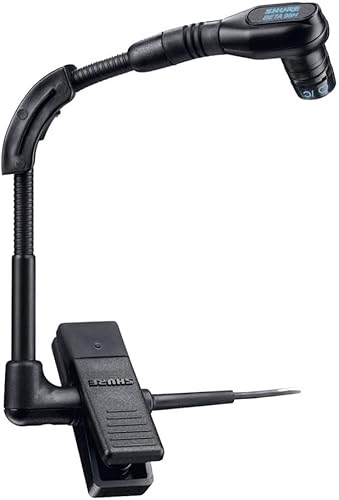
The Shure Wired BETA 98H/C offers the same acoustic performance as its wireless counterpart but features a wired XLR connector for direct connection to mixing consoles and audio interfaces. This miniature instrument microphone utilizes a cardioid condenser capsule and a flexible gooseneck clip-on design, making it suitable for saxophones, brass instruments, and percussion rims.
The inclusion of a wired XLR preamplifier connection ensures a stable, interference-resistant signal path ideal for studio recording and permanent stage installations. The cardioid polar pattern focuses on the intended sound source while suppressing ambient stage noise. Musicians and sound technicians benefit from the reliable, battery-free operation afforded by standard XLR cable routing.
The flexible gooseneck allows performers and engineers to adjust the microphone angle precisely, capturing the desired timbre of the instrument. Its ability to handle high sound pressure levels makes it equally effective on loud brass sections and intricate percussion setups.
What stands out
- Miniature instrument microphone equipped with a wired XLR connector
- Cardioid condenser element for focused sound isolation
- Gooseneck clip-on configuration for secure attachment to brass and percussion
What to consider
- Wired connection tether restricts physical mobility compared to wireless alternatives
- Requires a cabled run back to the mixing console or interface
Bottom line: A dependable wired miniature microphone providing pristine sound capture and robust XLR connectivity for professional musicians and engineers.
Related: Mastering the High A Flat Note
5. Lococo UHF Flute Mic
Best for flute and piccolo players who need an extended wireless range and a digital screen display for live performances.

The Lococo UHF Wireless Flute Microphone System is specifically designed for wind music instruments, offering a dedicated setup for flutes, piccolos, and clarinets. The system includes a matched receiver and transmitter pair capable of maintaining stable audio transmission over a 160ft range. An integrated digital screen provides clear visibility of operating parameters during use.
Tailored for flute performance, the microphone captures the airy nuances and dynamic range of the instrument without restricting the player’s posture. The UHF wireless transmission helps bypass common interference issues found in crowded 2.4G environments, ensuring a reliable connection across larger performance spaces. The digital screen simplifies frequency management and battery monitoring.
Musicians performing in concert halls, churches, or outdoor venues will find the extended range advantageous for stage movement. The dedicated instrument mounting design ensures the microphone stays correctly aligned with the embouchure or headjoint area.
What stands out
- 160ft wireless range utilizing UHF transmission technology
- Equipped with an integrated digital screen for status monitoring
- Designed specifically for flute, piccolo, and clarinet applications
What to consider
- UHF frequency coordination may require manual channel selection in multi-system environments
- Dedicated wind instrument mount requires careful alignment to prevent unwanted breath noise
Bottom line: An extended-range UHF wireless system offering clear digital monitoring and specialized mounting for flute and wind players.
6. UHF Brass Microphone
Best for brass players seeking UHF wireless stability combined with reverb effects and OTG recording capabilities.

The UHF Wireless Instrument Microphone System incorporates a clip transmitter and receiver engineered for brass instruments such as trumpets, trombones, and saxophones. Beyond standard wireless audio transmission, this system features built-in reverb effects and OTG recording functionality, allowing musicians to enhance their sound and record directly to compatible digital devices.
The UHF transmission architecture provides a robust wireless link suitable for active stage performances. The clip-on transmitter attaches securely to the bell or body of brass instruments, keeping the setup streamlined and free of cumbersome cables. Built-in reverb controls allow performers to add acoustic depth directly from the transmitter unit.
OTG recording capability expands the utility of the microphone system, making it convenient for creators to capture clean audio performances directly onto phones or tablets. This feature bridges the gap between live stage performance and digital content creation.
What stands out
- UHF wireless instrument system with clip transmitter and receiver
- Built-in reverb effects for sound enhancement
- OTG recording functionality for direct digital capture
What to consider
- Additional features like reverb and OTG routing require familiarization with the transmitter interface
- Optimized primarily for brass instruments, necessitating adjustments for delicate wind instruments like flutes
Bottom line: A feature-rich UHF brass microphone system offering onboard reverb and direct digital recording capabilities for versatile performers.
7. Double Flute Mic Q2/DT-5
Best for flute players requiring a dual-transmitter wireless pickup system with micro-gooseneck positioning.

The Double Microphone for Flute Q2/DT-5 is a specialized UHF wireless microphone system featuring a receiver and two transmitters designed explicitly for flute performance. Utilizing a micro-gooseneck pickup design, this system allows precise placement to capture the acoustic properties of the flute accurately across its register.
The dual-transmitter configuration provides unique routing and blending possibilities for flute players who want comprehensive audio pickup across different points of the instrument. The UHF wireless receiver ensures stable signal transmission during performances, while the micro-gooseneck keeps the physical footprint minimal and lightweight.
Designed strictly for flute applications, the mounting mechanism secures safely to the instrument without impeding finger placement or embouchure control. This specialized approach addresses the unique projection challenges associated with transverse flutes.
What stands out
- Dual transmitter system designed specifically for flute applications
- UHF wireless receiver with micro-gooseneck pick-up elements
- Specialized mounting for balanced audio capture across the flute body
What to consider
- Managing two simultaneous transmitters requires careful battery maintenance and channel pairing
- Niche design is tailored exclusively for flute use rather than general multi-instrument brass setups
Bottom line: A specialized dual-transmitter UHF flute microphone system providing detailed micro-gooseneck pickup for serious flute performers.
8. 2.4G Flute Microphone
Best for flute players and multi-instrumentalists looking for a lightweight 2.4G wireless tie-on microphone system.

The 2.4G Wireless Flute Microphone utilizes a tie-on music instrument microphone design paired with a wireless receiver and transmitter. Engineered to accommodate flutes and various other acoustic instruments, this system provides a lightweight wireless solution for musicians seeking freedom of movement during practice or performance.
Operating on the 2.4G frequency band, the system pairs quickly and offers straightforward operation without complex menu navigation. The tie-on attachment method secures the microphone close to the sound emission point, ensuring reliable acoustic capture while maintaining comfort for the player.
Its versatility extends beyond flutes, making it adaptable for various acoustic instruments where a lightweight clip-on or tie-on microphone is preferred. The compact size of both the transmitter and receiver ensures they remain unobtrusive during transport and performance.
What stands out
- 2.4G wireless receiver and transmitter configuration
- Tie-on music instrument microphone design suitable for flutes and more
- Lightweight and portable construction for effortless setup
What to consider
- 2.4G wireless signals can be susceptible to interference in areas with heavy Wi-Fi traffic
- Tie-on mounting requires careful placement to avoid dampening the instrument’s natural vibration
Bottom line: A versatile, lightweight 2.4G wireless microphone system offering straightforward tie-on attachment for flutes and other instruments.
Understanding Flute and Wind Microphones
Choosing the correct microphone for wind instruments requires an understanding of how sound radiates from flutes, piccolos, and brass instruments. Unlike guitars or keyboards that output a direct electrical signal, acoustic wind instruments project sound through embouchure holes, keys, and bells. Capturing this acoustic energy accurately demands specialized microphone capsules and secure mounting hardware that will not damage the instrument finish.
Wireless technology has transformed how wind players perform on stage. Systems utilizing UHF or 2.4G frequencies allow performers to move freely without worrying about cable management. When evaluating wireless options, consider the performance environment, required range, and potential interference sources to ensure an uninterrupted audio signal throughout your set.
Wired versus Wireless Systems
The decision between wired and wireless microphone systems depends largely on your performance mobility and setup complexity. Wired systems, such as XLR-connected condenser microphones, provide a reliable, battery-free signal path that is ideal for studio recording and stationary stage setups. They eliminate the risk of wireless dropouts and frequency interference, delivering pristine audio fidelity directly to the mixing console.
On the other hand, wireless systems grant performers total freedom of movement. Clip-on transmitters eliminate tripping hazards and allow instrumentalists to interact dynamically with audiences. Whether utilizing a UHF system with an extended range or a convenient 2.4G setup, wireless microphones empower active performers to project their sound without physical restrictions.
Mounting and Placement Considerations
Proper microphone placement is critical when amplifying wind instruments, particularly flutes where air dispersion differs significantly from brass bells. Gooseneck clips allow musicians to position the microphone capsule at an optimal distance from the embouchure or headjoint, capturing a balanced blend of breath articulation and tonal resonance.
When selecting a clip-on microphone, ensure the mounting mechanism is compatible with your specific instrument’s geometry. Secure attachments prevent unwanted rattling or slippage during energetic performances, while rubberized or padded clamps protect the instrument’s delicate surface finish from scratches and pressure marks.
Evaluating Range and Connectivity
Wireless microphone systems rely heavily on stable signal transmission between the transmitter attached to the instrument and the receiver connected to the sound system. UHF systems often provide greater operating ranges and robust signal penetration, making them well-suited for larger stages, auditoriums, and outdoor venues where interference can be unpredictable.
Alternatively, 2.4G wireless systems offer compact, plug-and-play operation that excels in practice rooms, teaching studios, and smaller performance spaces. Understanding your typical venue size and environmental wireless congestion will guide you toward the most reliable connectivity option for your musical activities.
Maintenance and Power Management
Maintaining your instrument microphone system ensures longevity and consistent audio performance. Regularly inspect cables, connectors, and clip mountings for signs of wear. For wireless units, proper battery management—including charging lithium-ion batteries or carrying spare cells—prevents unexpected power loss during rehearsals or live shows.
Keep microphone capsules clean by wiping away moisture and dust accumulation that naturally occurs during wind instrument performance. Proper storage in dedicated cases protects delicate goosenecks and miniature condenser elements from physical damage between gigs and practice sessions.
Frequently Asked Questions
What is the difference between UHF and 2.4G wireless microphone systems?
UHF systems operate on ultra-high frequencies that often provide longer operating ranges and greater resistance to interference in complex stage environments. 2.4G systems operate on the same frequency band as Wi-Fi and Bluetooth, offering convenient, compact plug-and-play connectivity that works exceptionally well for practice, teaching, and smaller venues.
Can a flute microphone be used for other instruments?
Many clip-on instrument microphones feature versatile mounting designs that accommodate multiple wind and brass instruments. However, specialized flute microphones are tailored specifically to capture the unique acoustic projection of flutes and piccolos, whereas brass-focused mics are calibrated for the higher sound pressure levels of trumpets, trombones, and saxophones.
Do wireless instrument microphones require phantom power?
Wireless transmitters supply the necessary operating power to the attached microphone capsule through their internal batteries or rechargeable cells. Wired condenser microphones, conversely, typically require external phantom power supplied via an XLR cable from an audio interface or mixing console.
How do I prevent breath noise when using a flute microphone?
Preventing excessive breath noise involves careful gooseneck positioning. Placing the microphone capsule slightly offset from the direct stream of air escaping the embouchure hole helps capture the rich tone of the flute while minimizing wind turbulence artifacts.
Are clip-on microphones safe for instrument finishes?
Most quality clip-on instrument microphones incorporate padded clamps, rubberized grips, or gentle spring-loaded mechanisms designed to secure the microphone firmly without marring, scratching, or damaging the instrument’s surface finish.
Final Thoughts
Selecting the right microphone system for your flute or wind instrument enhances your ability to project clearly across practice rooms, teaching spaces, and live stages. By carefully reviewing the specific attributes of each wireless and wired configuration—ranging from extended UHF ranges to compact 2.4G setups and specialized dual-transmitter designs—you can find a tool that complements your performance style.
Investing time in understanding mounting options, connector types, and signal transmission technologies ensures that your musical expression is captured accurately. Whether you choose a dedicated flute microphone or a versatile brass system, prioritizing secure attachment and reliable audio fidelity will support your growth and performance endeavors for years to come.