Double bass open strings form the absolute acoustic foundation of the orchestral string section, providing some of the lowest fundamental pitches in standard orchestral writing. These four strings, tuned in ascending fourths as E1, A1, D2, and G2, require more physical energy to set into vibration than the upper strings, owing to their greater mass and length.
Because open strings do not involve the left hand stopping the string against the fingerboard, they deliver maximum natural resonance and volume without fingering pressure. Orchestral players rely on these unstopped pitches to anchor harmony, match intonation with brass instruments, and provide stability during complex rhythmic passages.
Understanding how to properly address these fundamental pitches involves mastering specialized bowing mechanics, managing string tension variations, and utilizing acoustic properties to blend effectively within the larger ensemble. Careful attention to open strings directly improves overall orchestral tone production and section cohesion.

Standard Open String Tuning And Layout
The E-String Foundation
The lowest open string on the standard orchestral double bass is the E1 pitch. This thick, heavy string anchors the harmonic framework of the ensemble, delivering depth and structural stability.
Because of its exceptional thickness, the E-string requires careful management of bow speed, arm weight, and contact point to speak clearly without crushing the sound.
The A-String Role
Positioned a fourth above the E, the A1 string bridges the gap between sub-bass frequencies and the mid-register of the instrument. It carries significant weight in driving rhythmic figures.
Players must balance the A-string carefully to ensure it matches the warm timbre of the lower E without sounding overly bright or thin in dense orchestral textures.
The D-And-G-String Upper Register
The D2 and G2 strings form the upper half of the standard tuning layout, extending the instrument’s open-string range into melodic territory and complex harmonic intervals.
These higher open strings tend to respond more quickly to the bow than the lower two, requiring subtle adjustments in bow speed and arm weight to maintain a seamless tonal color across the section.
Before evaluating individual note placements, it is helpful to examine standard double bass tuning across the fingerboard.
For closely related guidance, see cleaning double bass strings.
Acoustic Resonance And Orchestral Integration
Sympathetic String Vibrations
Open strings possess a unique capacity for sympathetic resonance, vibrating freely when other instruments or bass notes sound matching overtones in the performance space.
Orchestral players must remain aware of this physical phenomenon, as unattended open strings can ring unintentionally and muddy delicate musical passages during quiet movements.
Projecting In Large Ensembles
Cutting through a full symphonic texture requires utilizing the maximum acoustic potential of open strings, particularly when doubling cellos or low brass instruments.
The natural overtones generated by unstopped strings help carry the fundamental bassline into distant rows of the concert hall without requiring excessive physical force.
Balancing With Cello Sections
The double bass open strings overlap significantly with the lower register of the cello section, creating potential masking issues if tuning and phrasing do not align.
Careful listening ensures that the deep resonance of the bass open strings supports the cello lines rather than overpowering their articulation and clarity.
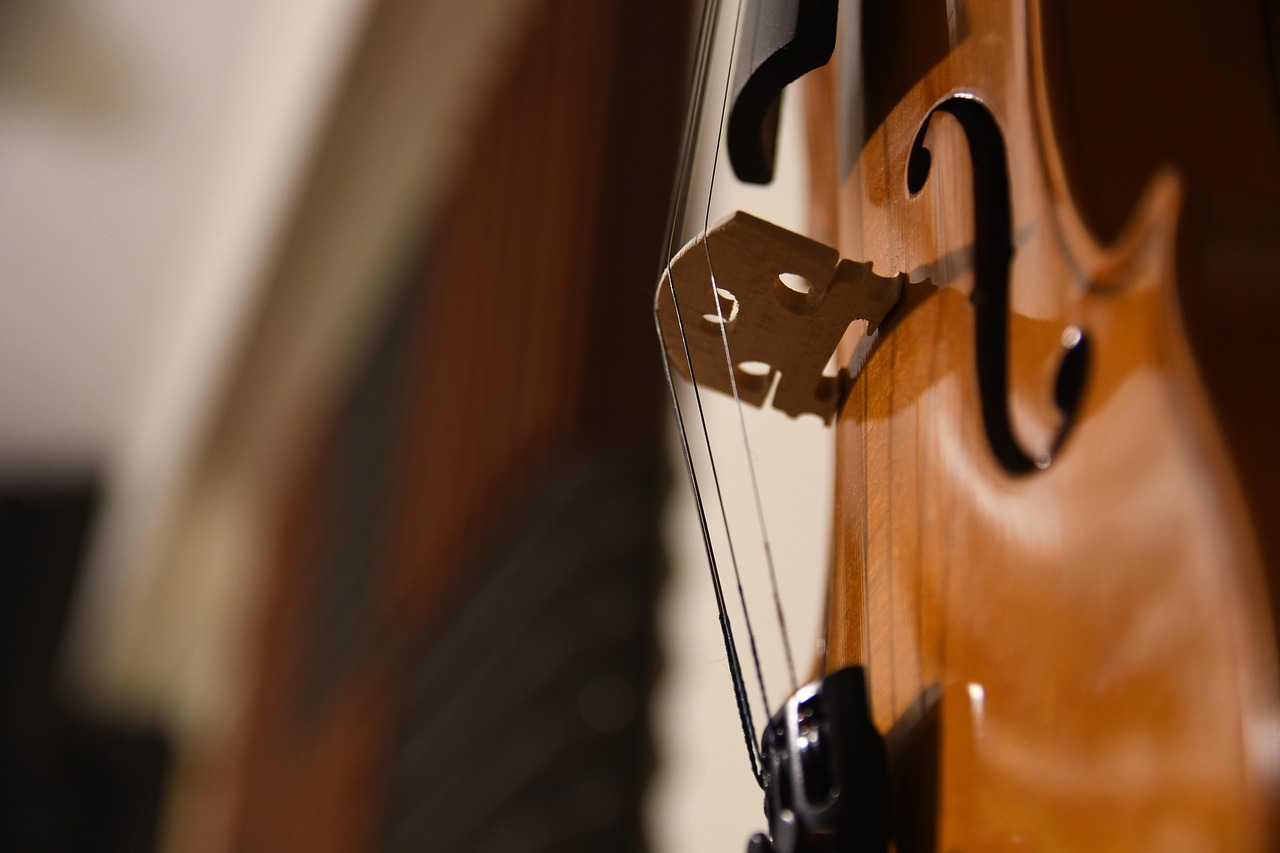
Maintaining optimal instrument resonance often involves regularly changing double bass strings to preserve clear overtones.
Bowing Technique On Open Strings
Contact Point Management
Maintaining the correct bow contact point is critical when playing open strings, especially on the thick lower strings where placement errors cause scratching noises.
Players adjust their distance from the bridge based on dynamic demands, moving slightly closer to the bridge for fortissimo entries and toward the fingerboard for softer dynamics.
Arm Weight And Downbow Initiation
Initiating a clean sound on an open string requires utilizing natural arm weight rather than squeezing the bow with the fingers and hand muscles.
Downbow strokes demand immediate engagement of the string from the frog, transferring gravity smoothly through the bow hair to establish a stable, centered initial pitch.
Sustaining Tone Through Bow Changes
Smooth bow changes on open strings prevent unwanted gaps in sound or sudden accents that disrupt the legato line of a sustained orchestral pedal point.
Distributing bow speed evenly and maintaining consistent arm weight across the frog and tip transitions helps sustain a continuous, even tone through the bow change.
Intonation And Pitch Accuracy Mechanics
Tuning Stability Challenges
Double bass strings are sensitive to temperature and humidity fluctuations, causing open strings to drift out of tune during long rehearsals or stage performances.
Regular pitch checks using harmonics or electronic references help maintain absolute tuning stability before tackling demanding symphonic literature with the full ensemble.
Adjusting For Room Acoustics
Concert halls with heavy absorption or excessive reverberation alter how open strings project, requiring players to adapt their intonation strategies for the specific room.
Listening to the natural acoustic feedback of the hall allows bassists to compensate for dead spots and ensure their foundational pitches blend seamlessly.
Checking Against Section Colleagues
Unison playing within the bass section relies on closely matched open string tuning and synchronized attack points; slight tuning discrepancies produce audible beats and can reduce projection.
Section leaders must establish a reliable pitch baseline, prompting ensemble members to adjust their open strings collaboratively before complex tutti entrances begin.

Frequently Asked Questions
Why do double basses tune in fourths instead of fifths?
The double bass is traditionally tuned in fourths—E1, A1, D2, and G2—primarily because of the physical span of the human hand on the fingerboard.
The double bass descends from the viol family, which was traditionally tuned in fourths, and that convention carried forward into modern orchestral practice. Fourth tuning also reduces left-hand stretches in the lower positions compared with fifth tuning across the instrument’s long scale length, making lower-register navigation more ergonomically practical for most players.
How often should orchestral bassists check their open strings during rehearsal?
Orchestral bassists should discreetly check their open strings whenever the ensemble takes a short pause or during multi-measure rests in the rehearsal score.
Because heavy playing and temperature shifts can alter string pitch—whether the strings are steel, synthetic-core, or gut—frequent subtle adjustments help keep the section anchored to a dependable pitch center throughout the session.
Can open strings be used effectively in fast passage work?
Open strings can be used effectively in fast passages, but they introduce a distinct tonal timbre that contrasts sharply with stopped notes on the fingerboard.
Orchestral players must weigh the speed advantage of an open string against the potential loss of articulation control, ensuring that rapid crossings do not create uneven accents or unwanted harmonic ringing.
How do orchestral bassists manage sympathetic ringing from open strings during quiet passages?
Orchestral bassists actively dampen open strings with their left hand or bow hair during delicate woodwind or quiet string solos. Because unstopped strings vibrate freely in response to ambient room frequencies, leaving them unattended creates unwanted acoustic fuzz and muddy textures in the performance hall. Furthermore, these sympathetic vibrations reinforce overtones already present in the room, adding unwanted resonance without any direct bow contact.
Players constantly scan their rehearsal scores for quiet dynamic markings, carefully anticipating when sympathetic feedback might compromise the surrounding musical line. Quick, silent touches of the fingerboard halt unwanted resonance instantly, preserving the dynamic transparency of the wider orchestral ensemble during quiet passages.
Why do some orchestral scores call for natural harmonics instead of standard open strings?
Composers and orchestral arrangers occasionally specify natural harmonics, produced by lightly touching an open string at a precise nodal point, to achieve a focused and shimmering timbre. This technique suppresses the fundamental and emphasises upper partials, producing a distinctively glassy, flute-like sound that sits differently within the symphonic texture than a full open string.
Such passages allow the double bass section to blend smoothly into ethereal woodwind lines or delicate string chords without ever overpowering lighter instruments. It provides an alternative tonal color while still utilizing the full open string length as an acoustic reference for the passage.
How do double bass open strings interact with low woodwinds like bassoons and contrabassoons?
Double bass open strings share a fundamental frequency register with low woodwinds like bassoons and contrabassoons, creating an acoustic overlap that can anchor the bottom of the orchestra. When woodwinds double the bass line, the contrasting timbres of bowed strings and double-reed instruments can combine into a blended tone that projects into the hall.
Amateur orchestral musicians must listen closely to balance this pairing during rehearsals, ensuring the attack and volume of the open bass string does not mask the reedy articulation of the woodwinds. Careful tuning alignment maintains transparent counterpoint and structural clarity throughout complex symphonic movements and demanding tutti sections across the orchestra.
Why do bassists often choose stopped notes over open strings for identical pitches?
Experienced orchestral players frequently substitute a stopped fingerboard note for an open string because stopped notes allow for continuous vibrato and smoother color matching. An open string cannot be modified with vibrato and its timbre may contrast with the expressive colour of surrounding stopped notes, which can make it stand out within a warm melodic line.
Additionally, shifting positions to play a note with the left hand helps maintain uniform tone production across rapid scale runs and melodic passages. This artistic choice prevents abrupt timbral shifts between adjacent notes in complex symphonic literature, keeping the overall section sound cohesive, warm, and highly polished.
How can orchestral listeners identify the acoustic impact of open bass strings in a concert hall?
Concert hall listeners may notice open bass strings as moments of added acoustic depth and resonance, particularly in passages where the bass section enters on a low fundamental pitch. These low, unstopped pitches add acoustic depth beneath string melodies and brass passages, contributing structural weight to the overall harmonic texture.
Noticing these deep sonic foundations helps audience members appreciate the underlying architecture of classical orchestral harmony, revealing how the lowest string section securely supports the wider symphonic structure from below. Recognizing this subtle acoustic interplay significantly enriches the overall listening experience during major orchestral masterworks performed in large acoustic spaces.
What effect do heavy bow strokes on open strings have during loud orchestral tuttis?
At fortissimo dynamics, open strings played with full arm weight and an appropriate contact point can project the bass line clearly through a dense orchestral texture. The challenge is sustaining maximum amplitude without pressing so hard that the string stops vibrating freely.
However, players must guard against pressing too hard into the string, which chokes the string’s vibration and produces an abrasive, scratchy sound. Controlled arm weight, rather than finger pressure into the stick, helps maintain a clear, robust tone even at loud dynamic levels.