The contrabass and double bass represent the largest and lowest-pitched bowed string instruments in the modern symphony orchestra. Serving as the primary harmonic and rhythmic anchor, these instruments provide the foundational bassline that supports the entire ensemble structure. Understanding their mechanical design, acoustic properties, and orchestral function is essential for amateur musicians and engaged listeners alike.
While the terms contrabass and double bass often refer to the same instrument, nuances in repertoire, tuning conventions, and historical context occasionally distinguish them. Orchestral players navigate long fingerboards, thick strings, and specialized bowing techniques to project deep, resonant tones across large concert halls. Proper technique and instrument care ensure these resonant giants maintain their structural integrity and expressive capabilities.
This educational guide examines the acoustic properties, orchestral responsibilities, physical mechanics, and maintenance practices associated with the double bass. By exploring these topics, players and listeners can deepen their appreciation for the instrument’s vital role in classical music literature and symphonic performance practice.
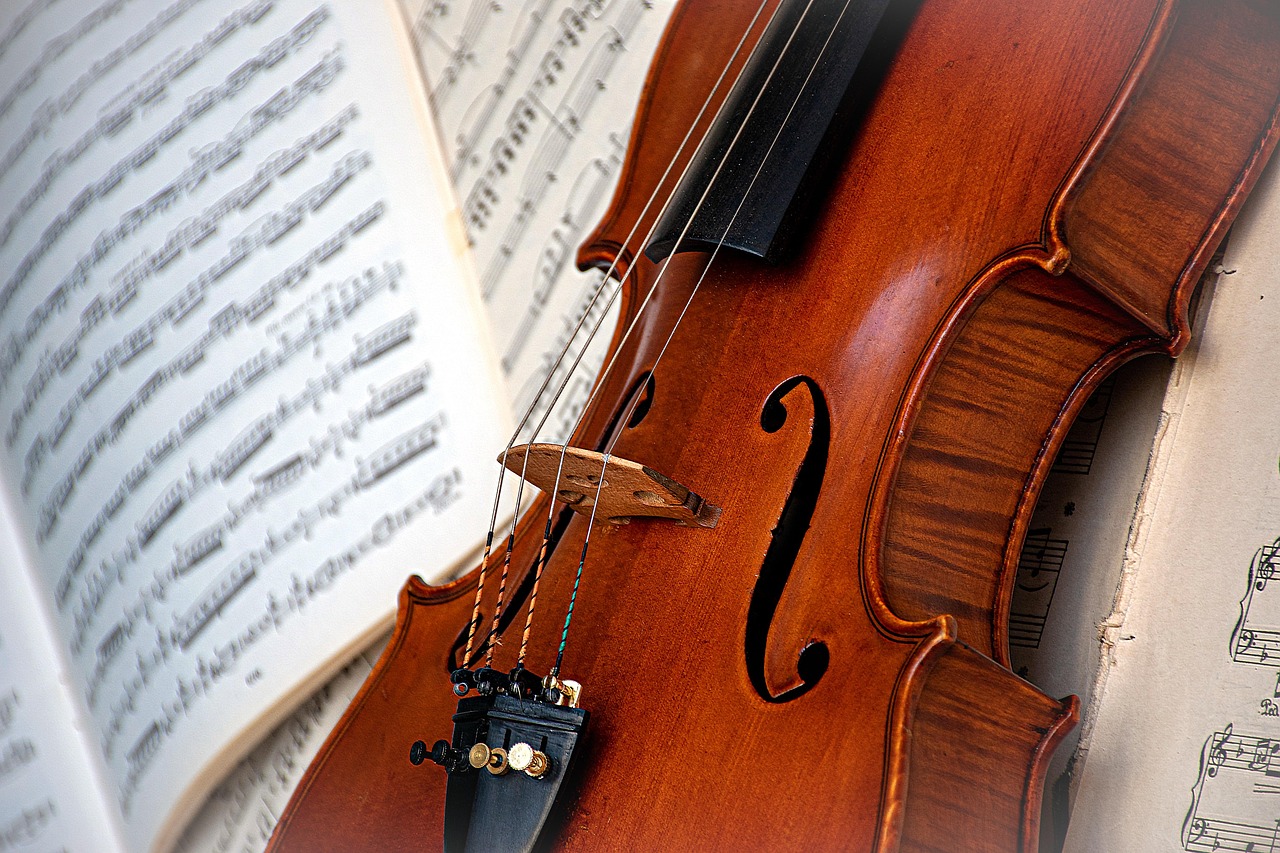
Instrument Anatomy and String Configuration
Body Shapes and Woods
Double bass bodies feature diverse geometries, including an asymmetrical violin shape, a sloping viol shape, and a round-back busetto design. These geometric variations influence both internal air volume and structural durability.
Luthiers construct the top plate from seasoned spruce to maximize soundboard flexibility. Hardwoods like maple are traditionally selected for the back and ribs to withstand immense string tension.
Fingerboards and Neck Profiles
Unvarnished ebony fingerboards provide a hard, smooth surface capable of enduring continuous finger pressure. The substantial length requires precise planing to prevent string buzzes across numerous registers.
Neck profiles are carved to accommodate large hand spans safely. Ergonomic shaping helps players shift efficiently between lower foundational notes and higher melodic passages in symphonic scores.
String Types and Tension
Modern string options include gut, steel rope core, and synthetic multi-filament designs. Each material imparts distinct tonal warmth, overtone richness, and bowing resistance.
High string tension demands robust tailpieces and sturdy pegs to maintain tuning stability. Players must monitor string wear closely to preserve accurate intonation during demanding orchestral rehearsals.
For closely related guidance, see double bass and violin.
Orchestral Role and Section Dynamics
Harmonic Foundation and Basslines
The double bass section anchors the vertical harmony of the orchestra by outlining root notes and inversions. Composers rely on this deep register to ground complex polyphonic textures securely.
Balancing volume with upper strings requires careful listening from every section member. A unified bassline ensures that woodwind chords and brass chorales rest upon a solid acoustic foundation.
Section Unison and Internal Balance
Playing in unison requires synchronized bowing lanes and identical articulation timing among all section players. Even slight timing discrepancies can muddy the clarity of fast symphonic tutti passages.
Amateur players must blend individual tone colors to create a singular, homogenous voice. Listening across the desk helps maintain consistent intonation throughout complex developmental sections.
Interaction with Percussion and Timpani
Bass players work closely with the timpani and lower percussion to establish the rhythmic framework of the orchestra. Precision in attack and release creates a synchronized rhythmic pulse.
Matching the articulation of plucked or struck bass notes with low percussion enhances overall rhythmic drive. This coordination is especially critical in dance movements and march-style orchestral compositions.
For closely related guidance, see tom and george martin double bass.
Bowing Mechanisms and Right-Arm Mechanics
French and German Bow Styles
The French bow is held overhand like a cello bow, offering nimble articulation and quick string crossings. Players often favor this style for technical agility in lighter orchestral passages.
The German bow is held underhand with a wider frog, and many players find the grip facilitates the use of arm weight for sustained, full strokes. This hold can provide useful leverage for heavy foundational playing, though volume and tone depend on the individual player’s technique.
Articulation and Attack Nuances
Executing clean note beginnings requires precise coordination between bow speed, arm weight, and contact point. Players adjust these variables to produce smooth legatos or sharp accents.
Contact points closer to the bridge yield brighter, more intense upper partials. Conversely, playing closer to the fingerboard creates a darker, warmer tone suited for lyrical passages.
Spiccato and Off-the-String Strokes
Controlled bouncing strokes require a relaxed wrist and careful management of natural bow elasticity. The heavy mass of the double bass bow demands significant physical endurance.
Practicing off-the-string patterns at moderate tempos helps develop reliable right-arm rebound mechanics. Orchestral players apply these techniques to articulate brisk, rhythmic classical and early romantic movements.
For closely related guidance, see double bass bow hair.
Physical Ergonomics and Preventative Care
Posture Management and Seating
Maintaining a balanced posture whether sitting on a tall stool or standing prevents chronic repetitive strain injuries. Endpin height is adjusted so the instrument sits at a comfortable playing angle; the appropriate height varies by the player’s stature, technique, and whether they sit or stand.
Relaxed shoulder alignment and natural elbow positioning reduce physical tension during extended rehearsal blocks. Proper ergonomics protect the player’s back, arms, and hands from long-term fatigue.
Climate Control and Wood Safety
Solid wood instruments react sensitively to fluctuations in relative humidity and ambient temperature. Rapid environmental shifts can cause unglued seams, top cracks, or warped fingerboards.
Using humidifiers during dry winter months helps stabilize the internal moisture content of the instrument. Protective cases shield the bass from thermal shock during transport to rehearsal venues.
Bridge Alignment and Peg Maintenance
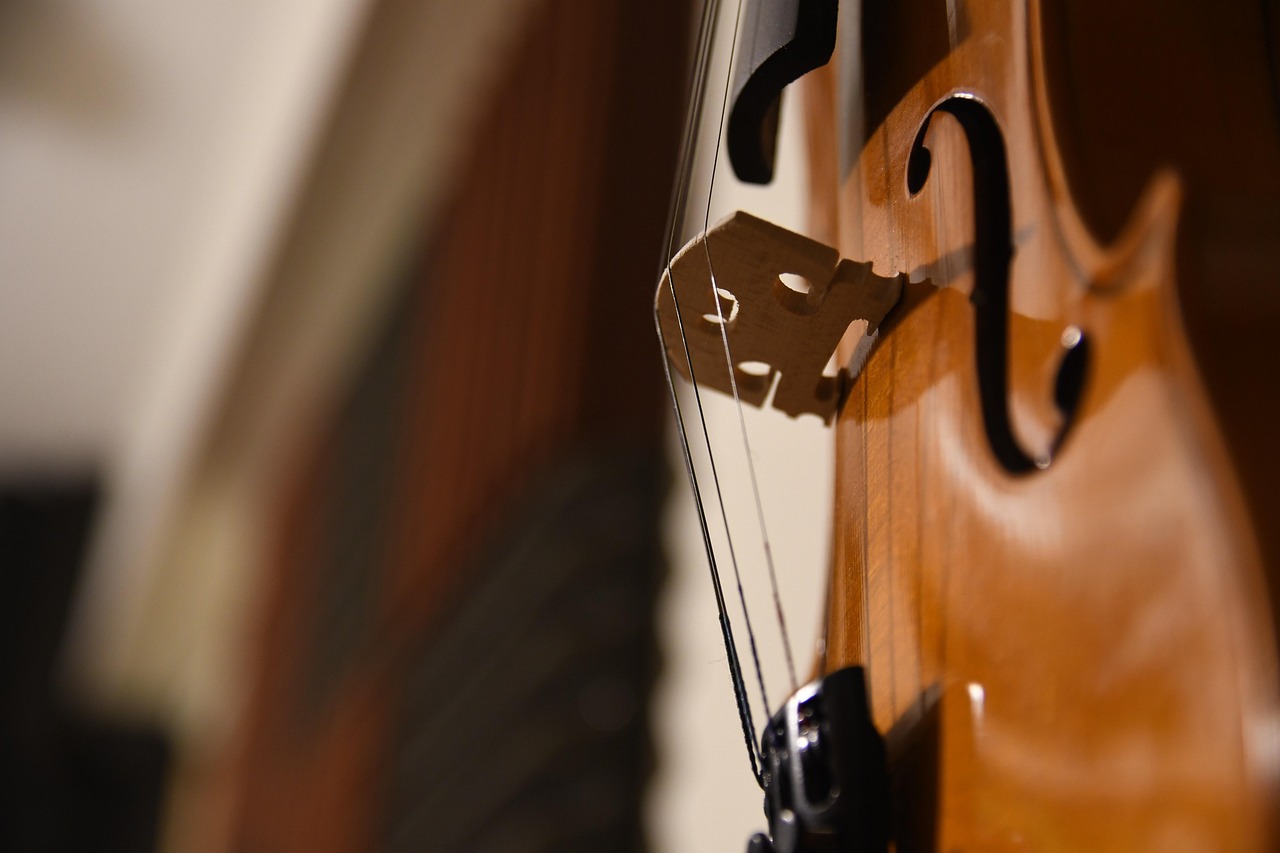
The bridge must remain perpendicular to the instrument top, positioned evenly between the F-hole notches. Regular inspection prevents the heavy string tension from pulling the bridge forward.
Peg compounds help wooden pegs turn smoothly without slipping under high tension. Keeping pegs and the tailpiece cord (tailgut) in good condition prevents sudden tuning failures during performance.

Frequently Asked Questions
How do contrabass and double bass differ in modern practice?
In contemporary orchestral terminology, contrabass and double bass refer to the exact same instrument. Historical scores occasionally used contrabass to denote specific tuning variations or exceptionally low-pitched parts.
Modern symphonic players use standard double basses for all orchestral literature regardless of the label. The choice of instrument, strings, and bow style depends on personal preference and historical context.
What is the purpose of the mechanical extension on some basses?
A C-extension is a mechanical device fitted to the pegbox or scroll that extends the instrument’s range downward to a low C. Designs vary; some use a series of levers or capos, others are played fully by hand, and the number of stopped positions depends on the specific mechanism.
This extension allows players to execute basslines that call for pitches below the standard low E without transposing parts upward. It is a practical option for players whose repertoire regularly requires those lower pitches.
How should amateur players approach difficult orchestral excerpts?
Amateur musicians benefit from isolating complex rhythmic figures and practicing them slowly with a metronome. Breaking down shifts into smaller intervals ensures accurate intonation across wide registers.
Studying full conductor scores provides valuable context regarding how the bassline interacts with woodwinds and brass. Listening to professional recordings helps internalize stylistic phrasing and articulation expectations.
How do orchestral musicians safely transport a double bass to rehearsals?
Transporting a full-sized double bass requires specialized, heavy-duty padded soft cases or rigid flight cases equipped with sturdy handles, reinforced zippers, and robust transport wheels. Because of the instrument’s size, players need a vehicle with sufficient cargo space to lay or stand the cased instrument securely.
Securing the heavy bass with seatbelts or internal cargo straps prevents dangerous shifting during sudden braking maneuvers. Musicians should also allow the instrument to acclimatize gradually when moving between very different temperature environments, as rapid shifts can stress the wood and glue joints.
Why is the double bass tuned in fourths rather than fifths?
Unlike the violin, viola, and cello, which are tuned in successive intervals of fifths, the modern orchestral double bass is traditionally tuned in ascending fourths: E1, A1, D2, and G2. This tuning convention evolved historically in part because the instrument’s large dimensions make the hand stretches required for fifths tuning impractical across the full fingerboard for most players.
Tuning in fourths keeps left-hand fingerings compact and manageable across complex symphonic literature, allowing players to navigate rapid scalar passages and intricate shifting patterns efficiently. Standard fourths tuning is the predominant convention in orchestral practice, though five-string basses and solo tuning (a whole step higher) are also used in some contexts.
How do double bass players coordinate effectively with low woodwinds?
Orchestral texture frequently pairs the double bass with low woodwinds like bassoons and the contrabassoon to reinforce vital foundational harmonic lines. Achieving a cohesive, blended sound requires careful listening across different instrument families, as bowed strings produce continuous sustained tones while double-reed instruments possess distinct acoustic attack transients and breath decay profiles.
Players must match articulation styles and dynamic curves closely so that neither the strings overpower the woodwinds nor the woodwinds punch through the symphonic ensemble awkwardly. When listening during rehearsals, bass section members should balance their volume to support the woodwind choir, creating a unified acoustic block that comfortably underpins the brass and upper strings securely.
What challenges arise when transitioning between pizzicato and arco?
Rapidly switching between plucked pizzicato passages and bowed arco sections demands exceptional right-hand dexterity, excellent anticipation, and careful bow management. Players must hold the bow securely in the hand while plucking with the fingers, or quickly retrieve the wooden stick from a resting palm without introducing extraneous noise or disrupting precise ensemble timing.
Plucked notes decay naturally and lack the sustained resonance of bowed notes; players adjust their attack weight and placement to project pizzicato clearly within the ensemble balance. Conductors rely heavily on the bass section to anchor energetic movements, making clean, synchronized plucked attacks essential for a crisp symphonic groove.
Do contrabass and double bass parts sound at the written pitch in orchestral scores?
No, standard orchestral contrabass and double bass parts are transposing instruments that sound one full octave lower than they appear written on the musical staff. Composers and orchestrators utilize this standard notation convention to keep notes within readable systems, avoiding excessive ledger lines that would clutter scores and complicate sight-reading.
Amateur musicians, listeners, and student conductors must carefully account for this octave displacement during detailed score study and sectional rehearsals. When a double bass part shows a specific pitch, the instrument sounds that pitch one octave lower.