The double bass and the violin represent the absolute extremes of the orchestral string family, spanning multiple octaves of distinct acoustic territory. Understanding how these two foundational instruments interact reveals the structural architecture of standard symphonic literature, from deep harmonic roots to soaring melodic lines.
For amateur orchestral musicians and active listeners alike, examining the relationship between the highest and lowest members of the string section deepens score study and improves rehearsal awareness. Recognizing their contrasting physical demands, tuning mechanics, and acoustic profiles helps performers blend their sounds effectively within a larger ensemble.
While the violin projects brilliant upper partials that can cut through lighter textures, the double bass provides the low-register foundation upon which the orchestra builds its harmonic structure. Mastering the interplay between these instruments requires careful attention to balance, intonation, and articulation across vastly different registers.

Acoustic Properties and Range Mechanics
Frequency Spectrums and Fundamental Tones
The violin operates in a high frequency spectrum where fundamental pitches easily penetrate dense orchestrations. Its small wooden body amplifies upper partials efficiently, allowing melodic lines to project clearly over lighter orchestral textures when scoring is well balanced.
The double bass generates low-frequency tones with long wavelengths that behave differently from high-frequency violin sound in a room. Its fundamental tones establish the low-register foundation of the ensemble, and in some halls the lowest pitches can be felt as vibration as well as heard.
Resonance Capacities in Orchestral Spaces
Orchestral venues interact differently with extreme registers, affecting how string instruments project their sound outward. High violin frequencies bounce rapidly off hard architectural surfaces, creating a bright ambient halo that surrounds the listener with intricate harmonic details and crisp articulation.
Low double bass frequencies possess long wavelengths that wrap around physical obstacles, while soft furnishings absorb primarily higher frequencies. How low frequencies propagate in a given hall depends on the room’s dimensions and surfaces; bassists benefit from listening to the ensemble’s overall blend and adjusting bow speed and contact point accordingly.
Harmonic Overtones and Timbral Blending
Despite spanning the widest register gap in the orchestral string family, the violin and double bass share a harmonic series that enables timbral blending. The upper partials of the bass often reinforce the lower formants of the violin, creating a cohesive composite sound when both instruments double a melodic line across octaves.
Composers frequently exploit this octave doubling to add weight to upper themes or clarify muddy bass passages. When executed with precise intonation, the resulting texture combines the bright projection of the violin with the earthy warmth of the bass to form a more unified orchestral voice.
When exploring instrument construction, examining the different types of double bass reveals how sizing affects overall acoustic output and range.
Orchestral Roles and Harmonic Foundations
Establishing Basslines and Metric Anchors
The double bass section carries the primary responsibility of laying down the harmonic foundation and driving the rhythmic momentum. By locking in precisely with the timpani and lower woodwinds, bassists provide a steady rhythmic grid that anchors the entire orchestra during complex transitional passages.
Violins occasionally absorb bassline duties in specific chamber textures or baroque transcriptions, but their main role remains focused on treble presentation. However, understanding the bassline is crucial for violinists, as every upper voice must harmonize logically with the foundational root notes established below.
Melodic Delivery and Expressive Lead Lines
Violins dominate the melodic landscape in standard symphonic literature, carrying primary themes with soaring lyricism and agile technical passages. Their design allows for rapid shifts, delicate vibrato usage, and nuanced phrasing that captures the emotional core of Romantic and Classical repertoire alike.
Although less common, the double bass occasionally steps out of the background to deliver expressive solo melodies in specific orchestral works. These passages require immense technical control to navigate the heavy strings while maintaining a singing tone quality that cuts through accompanying textures.
Counterpoint Interplay Across Register Extremes
Symphonic counterpoint frequently places musical ideas simultaneously in the extreme high and low registers of the string section. This spatial separation allows polyphonic lines to remain distinct and transparent, preventing complex fugal entries from becoming muddy or difficult for the audience to follow.
Players must listen across the entire ensemble rather than focusing solely on their immediate neighbors during contrapuntal playing. Matching articulation style and rhythmic precision between the highest violins and lowest basses ensures the overarching architectural design of the counterpoint remains entirely clear.
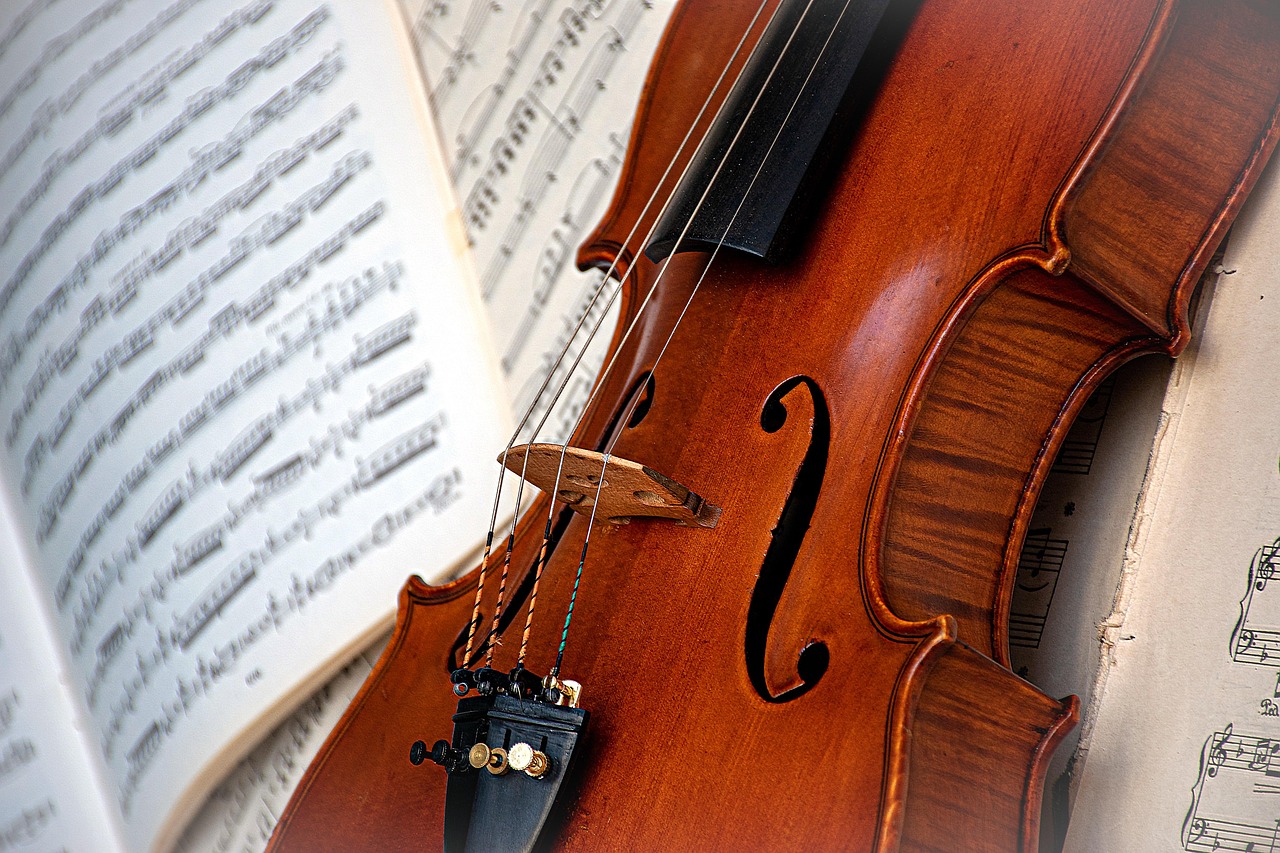
Musicians establishing deep harmonic foundations often rely on traditional configurations like double bass standard tuning to support the entire ensemble.
Bowing Techniques and Articulation Mechanics
Down-Bow Weight Distribution on Extremes
Managing bow weight requires entirely different physical approaches when comparing the massive double bass bow to the nimble violin bow. Bassists must leverage arm weight and shoulder engagement to sink into thick strings, ensuring a solid point of contact before initiating sound production.
Violinists utilize a lighter, more flexible wrist action to articulate crisp down-bows without crushing the delicate treble strings. Applying excessive pressure on a violin quickly chokes the acoustic resonance, whereas under-applying pressure on a double bass yields a breathy, uncentered tone.
Spiccato and Off-String Bowing Variations
Off-string strokes like spiccato demand rapid, controlled bouncing that behaves differently across the string length. Violinists find natural bounce points near the middle of the bow, where the stick’s flexibility facilitates effortless, rapid articulation for sparkling classical accompaniment figures.
Double bass spiccato requires a heavier, more deliberate bounce than violin spiccato; the effective bounce point varies by bow type, string, and passage, and tends to be found lower in the bow than the mid-bow point typical on violin. Because bass strings have high tension and heavy mass, the bounce is slower, wider, and requires distinct muscular impulses to maintain clarity in rapid rhythmic passages.
Legato Phrasing and Bow Speed Management
Sustaining long legato phrases across varied string lengths involves balancing bow speed with constant hair-to-string contact pressure. Violins can use relatively fast bow speeds with moderate, controlled pressure to achieve a smooth, singing line, though the exact balance of speed and weight varies with dynamic level, register, and string.
Double bass players manage bow speed carefully due to limited hair length relative to string thickness, often requiring strategic bow changes. Efficient bow distribution ensures that long lyrical passages remain connected and expressive rather than fractured by awkward mid-phrase reversals.
Advanced articulation and expressive phrasing become essential when performing a complex concerto for double bass in solo settings.
Ensemble Listening and Intonation Alignment
Tuning Protocols and Pitch Reference Points
Orchestral tuning typically begins with the oboe providing a standard concert pitch reference for the ensemble. Violins are tuned in fifths (G–D–A–E), using the shared A reference as a starting point, then tuning the remaining strings by interval.
Double basses standardly tune in fourths (E–A–D–G, with an optional low C extension or fifth string), which creates unique interval relationships when matching pitches with fifth-tuned instruments. Bassists must actively listen upward to ensure their fundamental pitches lock cleanly into the harmonic series generated by the upper strings.
Listening Across Register Discrepancies
Acoustic travel time and register differences mean high and low instruments perceive tempo and intonation slightly differently across a large stage. Violins must project their sound outward while listening back into the orchestra to catch the foundational impulses arriving from the rear bass section.
Bass players may use physical vibrations through the floorboards as one additional cue alongside direct acoustic feedback when synchronizing with the rest of the ensemble. Cultivating this dual awareness prevents the bass section from dragging behind the faster rhythmic articulation of the upper string desks.
Balancing Volume Dynamics in Full Tutti
Orchestral tuttis challenge players to balance volume dynamics across extreme registers to prevent overpowering sections. A large violin section can produce considerable collective volume, particularly in the upper registers, requiring restraint during subordinate passages so inner voices and basslines remain audible to the audience.
Double bass sections need sufficient bow weight and speed during forte passages to provide acoustic weight, though the exact approach depends on the hall, the dynamic context, and the conductor’s direction. Achieving true dynamic balance relies on matching the perceived energy and intensity of the sound rather than relying solely on raw decibel output.
Frequently Asked Questions
How do double bass and violin balance in standard orchestral textures?
Balancing these extreme instruments requires mindful dynamic control and orchestration awareness from all section members. Because violins naturally cut through textures with bright overtones, players must soften accompanying figures to let underlying basslines emerge clearly.
Because an orchestra employs far fewer basses than violins, composers frequently reinforce bass lines by having cellos double them—often sharing the same written pitch, with the double bass sounding an octave below the cello—to add presence against the full violin section. Conductors constantly guide these balance adjustments during rehearsals to maintain transparent harmonic relationships throughout complex symphonic movements.
What are the primary ergonomic differences between playing the double bass and the violin?
Ergonomic demands contrast sharply due to the immense scale and vertical orientation of the double bass versus the compact, shoulder-mounted violin. Violinists manage repetitive stress in the neck and left shoulder, requiring careful posture to maintain free fingerboard mobility during fast shifts.
Double bassists engage their entire core, back, and arms to navigate a massive fingerboard while standing or leaning against a high stool. Managing physical endurance on the bass requires efficient muscle usage to prevent fatigue without sacrificing tone production or intonation accuracy.
How should amateur string players approach score reading for parts involving extreme registers?
Score reading in extreme registers requires familiarity with the clefs used by each instrument. Violinists read treble clef. Double bassists read primarily in bass clef (sounding an octave lower than written pitch), though tenor and treble clefs are also standard in advanced orchestral and solo repertoire for higher registers.
Amateur musicians benefit from analyzing miniature scores away from the instrument to trace how melodic lines travel from the bass register upward to the violins. Recognizing these vertical voice leadings enhances overall rehearsal preparedness and deepens listening comprehension during full orchestra sessions.