The violoncello da spalla is tuned in fifths, specifically to the pitches C2, G2, D3, and A3, matching the exact nominal tuning of a standard full-size violoncello. This shoulder-mounted instrument requires careful attention to string tension and peg mechanics due to its compact historical proportions and intimate playing position.
Achieving stable violoncello da spalla tuning involves balancing string compliance across a shorter vibrating scale length than a floor cello; reported scale lengths on surviving and reconstructed instruments vary, and no single standard range applies to all examples. Because the instrument rests against the chest and shoulder, players must manage physical resonance alongside traditional acoustic tuning principles.
Proper maintenance of the pegs, tailpiece, and bridge ensures that this specialized baroque and classical hybrid instrument maintains pitch stability during extended rehearsal periods. Understanding historical pitch standards and modern electronic tuner integration allows orchestral musicians to adapt the da spalla seamlessly into varied ensemble contexts.
Fundamental Tuning Pitch and Intervals
Standard Pitch Standards
The violoncello da spalla shares its open-string pitches with the standard floor cello—C2, G2, D3, A3—tuned in fifths, with C2 as its lowest foundational pitch. Historical performance practices often employ A4 equals 415 Hz, while modern orchestral settings may require A4 equals 440 Hz or 442 Hz. Consistency in baseline pitch prevents severe intonation conflicts with keyboard or wind instruments during ensemble passages.
Selecting the appropriate reference frequency depends entirely on the historical context of the repertoire and the tuning conventions of collaborating ensemble members. Musicians must verify pitch standards prior to rehearsal to prevent intonation discrepancies within the string section. Careful consultation with conductors and collaborating musicians helps determine the appropriate reference frequency for the ensemble and repertoire.
Fifth Intervals Structure
The instrument is tuned in consecutive fifths spanning C2, G2, D3, and A3. Tuning these intervals benefits from careful listening to acoustic beating patterns rather than relying solely on electronic meter displays. In solo or period-ensemble contexts players may aim for acoustically pure fifths; in mixed ensembles slight tempering is sometimes preferred to blend with fixed-pitch instruments.
When adjusting adjacent strings, musicians should bow softly across double stops to isolate beating frequencies. Minimizing these beating patterns brings the fifths close to pure, though the degree of tempering may be adjusted to suit the ensemble context. Regular practice with interval checking maintains muscle memory for precise string placement under performance pressure, securing structural harmonic integrity.
Reference Tone Selection
Establishing a reliable starting pitch is vital for accurate da spalla tuning procedures. Players frequently use tuning forks or specialized clip-on electronic devices designed to handle lower register frequencies without tracking errors. Lower strings like C2 can sometimes confuse cheaper sensors because the fundamental is weak relative to upper partials in gut or synthetic wound strings, causing the tuner to lock onto a partial rather than the fundamental.
Clip-on tuners attached directly to the scroll can pick up vibrations efficiently, though ambient stage noise may occasionally interfere with digital readings. Cross-referencing digital outputs with an open A string or tuning fork guarantees optimal accuracy before transitioning into complex ensemble passages, minimizing potential intonation drift.
Players comparing range requirements often look at proper 5 string cello tuning to understand foundational pitch relationships.
For closely related guidance, see double bass solo tuning.
Pegbox Mechanics and Friction Management
Peg Dope Application
Wooden friction pegs require balanced lubrication to turn smoothly without slipping out of pitch during performance. Applying specialized peg compound or traditional soap and chalk mixtures helps maintain the ideal friction coefficient inside the tapered pegbox holes. Careful application prevents sudden slips that could abruptly slacken high-tension instrument strings and compromise structural safety.
Too much lubricant causes the pegs to slowly unwind under high string tension, while too little makes fine adjustments nearly impossible. Musicians should adjust peg compound gradually during seasonal humidity shifts to preserve tuning stability across demanding rehearsal schedules without risking instrument damage or unexpected finger strain.
Winding Technique Basics
Correct string winding technique inside the pegbox prevents overlapping coils that cause mechanical binding and sudden pitch jumps. Strings should wind neatly toward the pegbox walls, leaving adequate clearance against adjacent pegs to ensure smooth movement. Maintaining orderly coils minimizes friction points that frequently lead to premature string breakage during fine tuning processes.
Leaving a modest number of clean wraps around the peg barrel provides sufficient friction to anchor the string securely without putting excessive lateral pressure on the wooden pegbox walls. Proper spacing avoids pinching and prolongs string lifespan, ensuring consistent mechanical performance during demanding orchestral warm-up routines.
Structural Tension Relief
High overall tension placed on the da spalla bridge and top plate requires careful monitoring during major pitch adjustments. When raising pitch significantly, incremental tuning across all four strings distributes mechanical stress evenly across the wooden body. This measured approach prevents localized stress concentrations on the carved maple bridge feet.
Pulling a single string up to full tension while others remain slack can warp the bridge or cause the soundpost to shift internally. Gradual, alternating adjustments protect the delicate historical construction of the instrument from sudden structural failures or costly professional repair interventions during daily instrument maintenance.
Similar friction issues can occur if violin tuning pegs stuck situations are left untreated without adequate peg compound.
Fine Tuner Adjustments and Bridge Stability
Mechanical Fine Tuner Use
Tailpiece-mounted fine tuners allow for minute pitch corrections without requiring heavy manipulation of the wooden friction pegs. Musicians should keep fine tuner screws seated near the middle of their operational range to allow adequate room for both tightening and loosening during adjustments. This positioning ensures smooth control over subtle intonation shifts.
If a screw bottoms out, players must slacken the string slightly, pull the excess string through the peg, and reset the peg position manually. Relying exclusively on fine tuners without resetting pegs can cause uneven string tension distribution across the tailpiece, potentially damaging delicate metal components or snapping wire hooks.
Bridge Tilt Prevention
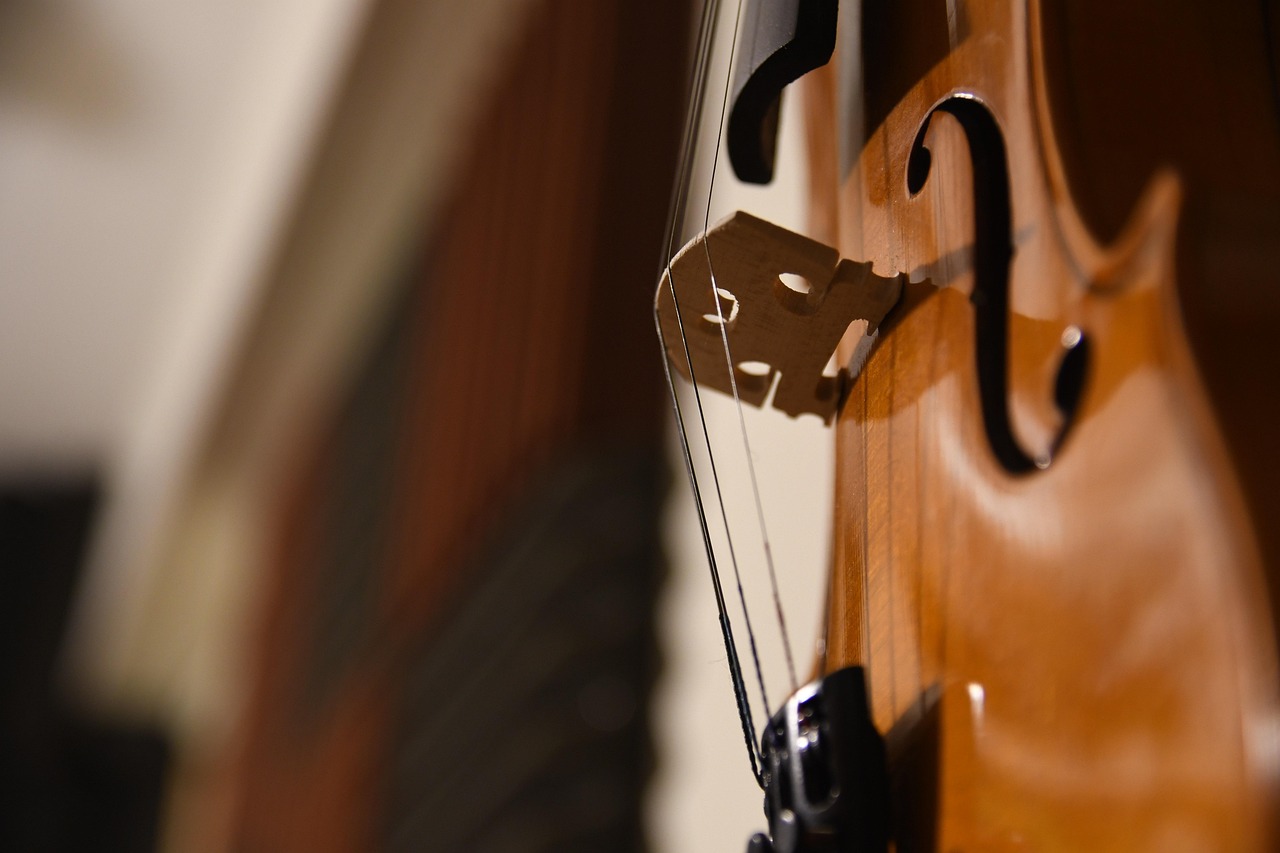
The bridge of a violoncello da spalla should remain upright and perpendicular to the belly of the instrument during tuning routines. As strings are brought up to tension, friction naturally pulls the top of the bridge forward toward the fingerboard. Regular visual checks prevent permanent warping of the delicate maple wood structure.
Players must periodically inspect the bridge angle and gently nudge it backward by hand if leaning occurs. Neglecting this essential maintenance step can cause the bridge to warp, snap, or collapse entirely under the combined pressure of all four strings, leading to expensive professional repairs and frustrating instrument downtime.
Tailgut and Saddle Clearance
The tailgut anchors the tailpiece securely to the lower endpin button and requires precise clearance over the wooden saddle. If the tailgut is improperly adjusted or shifts laterally, it can buzz against the top plate or damp the acoustic resonance. Proper alignment ensures maximum vibrational energy transfer.
Maintaining proper tailgut positioning ensures that string vibrations travel freely into the lower blocks of the instrument body without impedance. Any mechanical rubbing in this delicate area compromises intonation stability and degrades the instrument’s overall sound quality during ensemble performances, requiring careful luthier intervention when excessive wear appears.
Environmental Factors Affecting Pitch Stability
Humidity Impact on Wood
Wood naturally absorbs and releases moisture relative to changing ambient environmental conditions, directly altering the structural geometry of the stringed instrument. High humidity swells the wooden top and back plates, slightly lowering string tension and causing pitch to drop noticeably during indoor rehearsals and orchestral performances.
Conversely, dry indoor heating environments shrink the wood, altering the instrument’s geometry in ways that can affect string tension and pitch, and in severe cases risk cracking the top or back. Utilizing reliable case humidifiers helps stabilize the internal climate for delicate historical instruments against rapid seasonal shifts, protecting overall structural integrity, finish quality, and pitch memory.
Temperature Fluctuations
Temperature swings rapidly impact both metal strings and wooden fingerboards, creating significant tuning instability during live performance events. Cold environments tend to lower string pitch through changes in wood geometry and string properties, while warming can cause pitch to rise initially before settling; the net effect depends on the instrument, string type, and rate of temperature change.
Allowing sufficient time for the instrument to fully acclimate to room temperature before tuning prevents rapid pitch drift during the opening minutes of rehearsal. Musicians should always avoid leaving the instrument near drafty doorways, exterior walls, or direct sunlight to maintain reliable pitch consistency throughout the entire musical program.
Stage Lighting Considerations
Intense overhead stage lighting generates localized heat that can quickly push a violoncello da spalla out of tune. Performers must anticipate these thermal shifts and check their tuning immediately before stepping onto the concert platform under hot spotlights. The rapid expansion of strings under heat alters intervals unpredictably, requiring proactive tuning adjustments.
Keeping the instrument protected in its semi-rigid case until the last possible moment minimizes exposure to harsh lighting conditions. Regular check-ins during concert intermissions ensure the instrument remains stable throughout the program without unexpected pitch dropouts or embarrassing intonation errors during solo orchestral passages.
Frequently Asked Questions
What is the exact tuning of the violoncello da spalla?
The violoncello da spalla is nominally tuned in fifths to C2, G2, D3, and A3. This represents the same nominal pitch standard as a standard modern floor cello, with which it shares all four open-string pitches.
Because the instrument is played resting against the upper chest and shoulder rather than clamped between the knees, overall string tension and vibrating scale lengths are modified to accommodate the smaller physical dimensions while retaining the deep, resonant cello voice required for complex continuo and solo work.
How does string tension differ from a modern cello?
String tension on a violoncello da spalla is generally lower than that of a standard floor cello due to its significantly shorter physical vibrating scale length. Manufacturers design specialized strings to provide appropriate mass and compliance for the shorter scale, so that the strings respond well under the bow at the correct pitch without overstressing the instrument.
Players must adapt their bowing weight and attack angle to match this lower tension profile accurately during performance. Pressing too hard with the bow can cause the string to choke and produce a scratchy or crunched tone; lighter, more controlled bow strokes generally suit the lower tension profile and help maintain open-string resonance and clarity.
Can I use standard cello strings for da spalla tuning?
Using standard full-size floor cello strings on a violoncello da spalla is generally not recommended because their mass and tension are designed for a longer scale length. On a shorter instrument they may produce excessive tension at pitch, stress the structure, and yield a stiff, unresponsive tone.
Instead, musicians must rely on specialized da spalla string sets designed specifically for shorter scale lengths, often featuring pure gut, synthetic, or lighter wound metal constructions to achieve the correct tuning without risking structural bridge damage or excessive finger strain during extended rehearsal sessions.