Independent educational guides for amateur orchestral musicians and active listeners provide essential insights into historical and modern instrumental mechanics. Understanding how instruments function acoustically enhances both performance execution and analytical listening in diverse ensemble settings, fostering a deeper appreciation for orchestral repertoire.
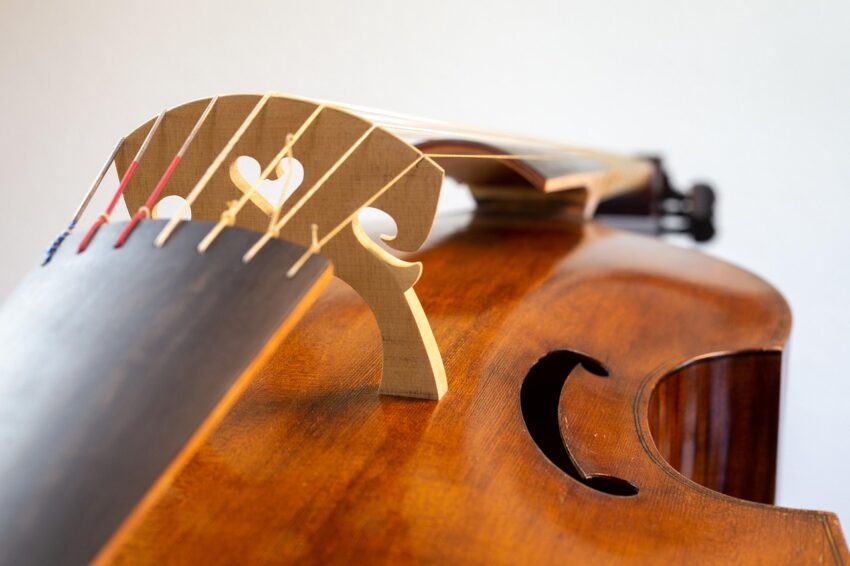
A central element in this study is the viola da gamba bridge, whose unique geometric design influences string tension, bowing clearance, and tonal energy transmission. By examining historical string mechanics alongside modern orchestral practices, musicians gain a clearer framework for evaluating ensemble balance, score realization, and historical performance standards.
Structural Mechanics of Historical Bowed String Instruments
The Geometry and Function of the Viola da Gamba Bridge
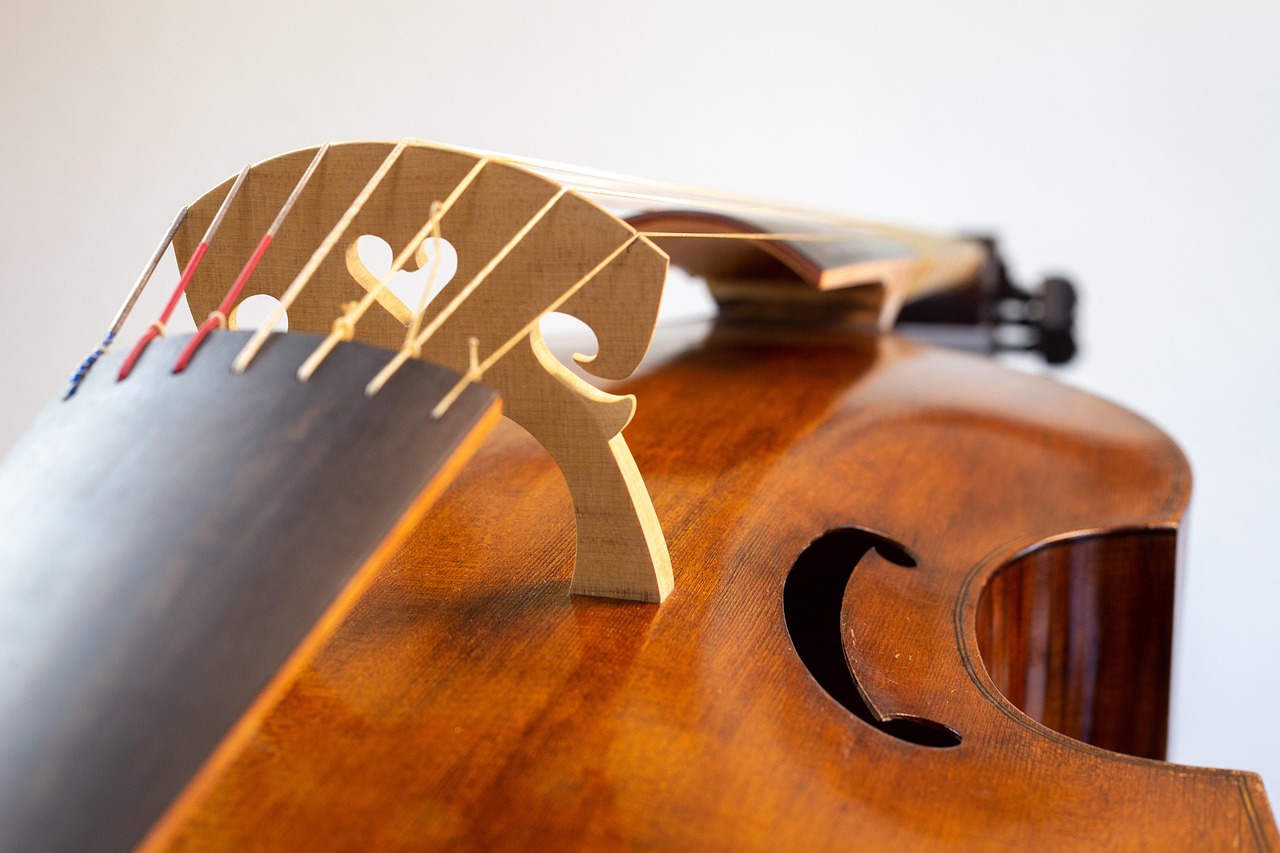
The viola da gamba bridge differs significantly from its modern violin family counterparts in both height and structural footprint. Its primary mechanical function is to transfer vibrational energy from the gut strings directly to the belly of the instrument without dampening delicate overtones.
Unlike arched modern bridges designed for single-string clarity under high tension, the gamba bridge features a flatter crown. This structural choice accommodates the fretted fingerboard and facilitates chordal playing across multiple strings simultaneously during complex polyphonic passages.
Arching, Curvature, and Bow Clearance
The curvature of a viola da gamba bridge is meticulously calculated to allow the bow to address single strings cleanly without unwanted contact on neighboring strings. Because viols are traditionally played with underhand bow grips, the physical angle of attack differs fundamentally from modern orchestral string technique.
Amateur musicians examining historical instruments must note how this bridge arching influences bowing mechanics and physical endurance. Even slight deviations in curvature can alter string crossing efficiency and change the overall resistance felt by the right hand during rapid polyphonic movements.
Wood Selection and Density in Historical Bridges
Historically, instrument makers selected dense, quarter-sawn maple or similar hardwoods to ensure efficient energy transfer without dampening high frequencies. The wood grain must be aligned vertically to channel vibrations straight toward the soundboard and interior bass bar.
Unlike the rigid, heavily footed bridges found on modern cellos, historical viol bridges often feature decorative cutouts or minimal mass to optimize resonance. These apertures are not merely aesthetic choices; they modify the mechanical filtering of high and low frequencies across the instrument.
When examining historical instruments, understanding the configuration of a 7 string viola da gamba helps clarify how downward string pressure affects the arched wooden bridge.
For closely related guidance, see the viola da gamba.
Comparative Acoustics: Viola da Gamba Versus Modern Orchestral Strings
Tension Profiles Across Gut and Steel Strings
Modern orchestral instruments rely on steel or synthetic core strings operating under high tension to project across large concert halls. In contrast, historical instruments like the viol use low-tension plain or wound gut strings, changing how the bridge responds to excitation.
The lower tension on a viola da gamba bridge results in a warmer, more fundamental-rich tone rather than the overtone-heavy brilliance characteristic of steel strings. Players transitioning between these instrument families must adjust their physical attack and listening expectations accordingly.
Transmitting Energy to the Soundboard
The bridge acts as a mechanical transducer, converting lateral and vertical string vibrations into acoustic energy. Like violin and cello bridges, the viol bridge sits unglued on the soundboard, held in place purely by downward string pressure, which requires precise placement during routine instrument maintenance.
If a bridge shifts even slightly out of alignment, the acoustic coupling is compromised, leading to a weak or tubby tone. Understanding this delicate balance helps amateur musicians appreciate the maintenance requirements and structural vulnerability of historical string instruments.
Resonance Characteristics in Ensemble Contexts
In an ensemble setting, the acoustic profile of low-tension instruments blends differently than modern strings. The viola da gamba bridge projects a diffuse, warm sound that integrates smoothly with wooden flutes and early keyboard instruments without dominating the overall texture.
Listeners analyzing historical recordings or live early music performances should listen for this textural integration. The acoustic space occupied by gut strings is less piercing, requiring listeners to focus differently on inner voices, counterpoint, and harmonic movement.
Comparing historical designs to an upright bass bridge setup reveals similar mechanical considerations regarding foot placement and belly tension.
Score Reading and Part Interdependence for Ensemble Musicians
Decoding Polyphonic Textures in Renaissance and Baroque Scores
Score reading is an essential skill for amateur musicians seeking to understand how their individual parts fit into the broader orchestral tapestry. Polyphonic music requires performers to track multiple independent melodic lines simultaneously rather than just following a single dominant tune.
When studying historical scores, musicians should identify points of imitation and rhythmic interplay. Recognizing these structural elements informs articulation choices and helps players adjust their volume to support whichever voice carries the primary thematic material.
Following Voice-Leading in Lower-Register Contrapuntal Lines
Lower register instruments, including cellos and bass viols, often carry foundational harmonic weight through walking basslines or intricate countermelodies. Reading these parts demands a solid understanding of root progression and harmonic cadence points.
Players must listen actively to upper voices to ensure their bass motion clarifies the underlying harmony without muddying the texture. Careful attention to articulation marks in the score ensures that contrapuntal lines remain transparent and distinct.
Balancing Historical String Timbres in Mixed Amateur Orchestras
Mixed amateur orchestras incorporating period instruments face unique blending challenges due to inherent disparities in volume and timbre. String players must listen closely to woodwind sections and keyboard continuo to achieve a cohesive ensemble sound.
Conductors and section leaders should encourage open discussions about bow strokes and vibrato usage. Aligning technical approaches across different instrument families creates a unified performance style that respects historical practices while remaining accessible to modern amateurs.
Rehearsal Dynamics and Practical Listening Strategies
Developing Intonation Awareness in Sectional Practice
Intonation in an orchestra is dynamic rather than fixed, requiring players to adjust pitch relative to harmonic context and neighboring instruments. Sectional rehearsals provide an ideal environment for honing this collective listening skill.
Musicians should practice listening to beat frequencies when tuning intervals like thirds and fifths. By eliminating these acoustic pulsations, sections achieve a pure, resonant tuning that enhances the overall chordal sonority of the orchestra.
Listening Beneath the Surface of Orchestral Textures
Active listening involves shifting focus between the foreground melody, inner harmonic filling, and foundational basslines. Amateur musicians often focus too narrowly on their own notation, missing crucial acoustic cues from other sections.
Developing this multidimensional awareness transforms rehearsal participation. When players actively monitor the broader orchestral soundscape, dynamic adjustments happen organically, reducing the need for constant intervention from the conductor.
Managing Bow Dynamics and Articulation Uniformity
Uniformity in bowing execution creates a cohesive string sound, but it requires deliberate coordination among section members. Players must agree on up-bow and down-bow allocations to ensure consistent phrasing and accentuation.
Variations in bow speed and pressure directly affect projection and timbre. Practicing these elements together helps amateur groups achieve professional-grade articulation clarity across challenging orchestral repertoires.
Woodwinds and Strings: Blending Historical and Modern Timbres
Understanding Wooden Flutes and Period Reeds
Woodwind instruments, particularly historical flutes and baroque oboes, possess distinct acoustic properties that differentiate them from modern metal counterparts. Their conical bores and simpler key systems produce a more vocal, less penetrating tone.
String players must understand these timbral differences to avoid overpowering delicate woodwind solos. Adjusting bow pressure and vibrato allows strings to complement rather than mask historical woodwind textures.
Dynamic Range Accommodation in Chamber Settings
Chamber ensembles and small orchestras require careful management of dynamic range to maintain internal balance. Because period instruments generally project less volume, modern players must scale back their maximum output.
This restraint is particularly important when playing works featuring solo instruments like the viola da gamba, whose subtle voice can easily be obscured by heavy string accompaniments or aggressive wind articulation.
Acoustical Interference and Tuning Compromises
Different instrument families handle intonation systems in varied ways, sometimes creating acoustic interference or beating when played together. Keyboard instruments tuned to historical temperaments require orchestral strings to adjust their tuning tendencies.
Recognizing these acoustic realities helps musicians approach tuning sessions with flexibility. Rather than relying solely on electronic tuners, players must trust their ears to blend harmoniously within the specific acoustic environment of the performance space.
Frequently Asked Questions
What is the primary function of a viola da gamba bridge?
The primary function of a viola da gamba bridge is to transmit string vibrations directly to the instrument’s wooden soundboard while maintaining correct string height and lateral spacing. Its relatively flat crown design facilitates chordal playing and underhand bowing across multiple strings simultaneously. Unlike modern arched bridges, it prioritizes polyphonic clarity and balanced multi-string response over single-string volume.
How does a historical viol bridge differ from a modern cello bridge?
A historical viol bridge is wider, features a flatter top curve, and has a lower overall profile than a modern cello bridge. Like modern string instrument bridges, a viol bridge sits unglued on the belly, held in place purely by downward string pressure. Modern cello bridges are taller, narrower, and optimized to withstand the extreme tension of steel or synthetic core strings.
Why do amateur musicians study orchestral score reading?
Amateur musicians study orchestral score reading to understand how their individual parts integrate into the broader musical fabric. This holistic perspective improves rhythmic coordination, intonation awareness, and interpretive decision-making during rehearsals. By tracking multiple voices, performers anticipate harmonic shifts and balance their volume appropriately against surrounding instruments.
What role do gut strings play in historical string instrument acoustics?
Gut strings operate under significantly lower tension than steel or synthetic alternatives, producing a warm, fundamental-rich tone with a softer initial attack. This distinct acoustic profile changes how the bridge transfers energy to the soundboard, resulting in a diffuse resonance that blends exceptionally well with historical woodwinds and keyboard instruments.
How can amateur sections improve their intonation during rehearsals?
Sections can improve intonation by actively listening for acoustic beat frequencies and adjusting their pitch relative to the prevailing harmonic center. Rather than relying exclusively on electronic tuners, players should practice tuning intervals like thirds and fifths purely by ear, achieving a resonant, unified chordal sound.
Why is timbral balance important in mixed period and modern orchestras?
Timbral balance is vital because historical instruments typically feature softer dynamic ceilings and distinct tonal colors compared to modern gear. Careful listening and conscious volume adjustments ensure that quieter period voices, such as wooden flutes and viols, remain clearly audible within the overarching orchestral texture.