The viola da gamba, a prominent bowed string instrument of the Renaissance and Baroque eras, occupies a unique place in historical performance practice and independent musical education. Distinct from modern orchestral string families, the viol features frets, underhand bow grips, and a distinct construction that prioritizes polyphonic clarity over sheer projection.
For amateur musicians and dedicated listeners alike, exploring the viola da gamba offers a deeper understanding of early music chamber textures, historical notation systems, and consort playing principles. Independent educational guides provide essential frameworks for approaching this repertoire without requiring affiliation with specific historical institutions or modern professional ensembles.
Historical Context and Instrument Anatomy of the Viola da Gamba
Origins and Evolution of the Viol Family
The viola da gamba family developed in fifteenth-century Spain before spreading rapidly throughout European courts and private musical households. Designed primarily for intimate ensemble performance, known as consort playing, these instruments evolved in parallel with early vocal polyphony. Composers valued the family for its homogeneous timbre.
Amateur practitioners studying historical treatises find that the instrument was treated not merely as a precursor to the cello, but as a sophisticated artistic medium with its own extensive solo and consort repertoire spanning more than two centuries of European musical history.
Structural Differences Between Viols and Violins
Unlike members of the modern violin family, traditional viols feature flat backs, sloping shoulders, and deep ribs designed to rest comfortably between the player’s legs. The internal bracing and top plate construction are generally lighter, which contributes to a more delicate acoustic resonance.
Understanding these anatomical distinctions helps listeners and players recognize why viols produce a characteristic silvery, resonant tone with rapid decay. This design supports clear counterpoint rather than the continuous, high-tension volume required in large modern concert halls.
Frets, Gut Strings, and Tuning Systems
Viola da gamba instruments are traditionally fitted with tied gut frets around the fingerboard, similar to a lute or guitar. These movable frets assist with intonation and provide a distinct tactile feedback for the left hand during complex melodic passages.
Strings are manufactured from unspun gut for the upper registers, moving to metal-wound gut for lower pitches. Standard consort instruments, such as the treble, tenor, and bass viols, utilize specific fourths and thirds tuning patterns that differ significantly from modern fifths-based orchestral tuning.
The Bowing Technique and Underhand Grip
Playing the viola da gamba requires an underhand bow grip, where the player holds the stick with the palm facing upward and uses fingers to control tension on the hair. This mechanical approach facilitates natural articulation on accented notes and quiet beginnings.
Educational resources emphasize that mastering this specific grip allows performers to articulate rhythmic nuances inherent in Renaissance dance forms and Baroque fantasias. The physical mechanics differ fundamentally from modern violin or cello bow arms.
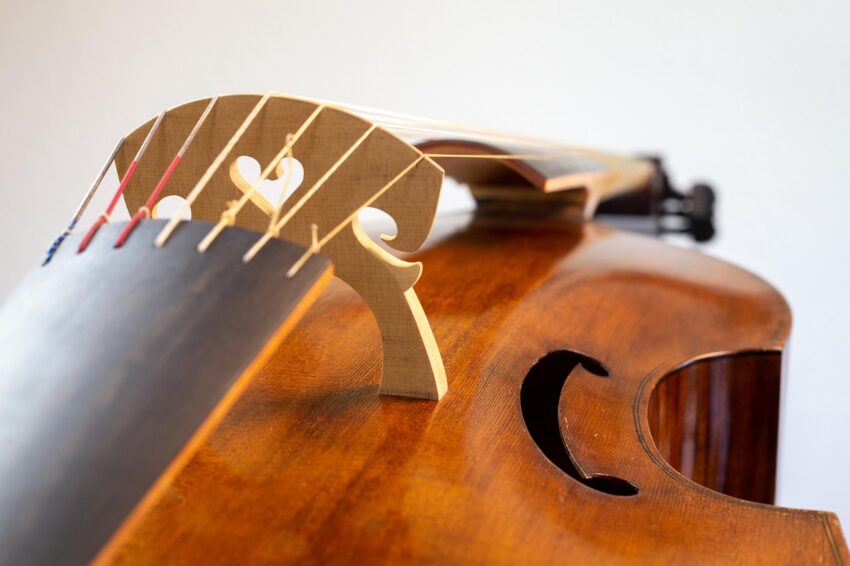
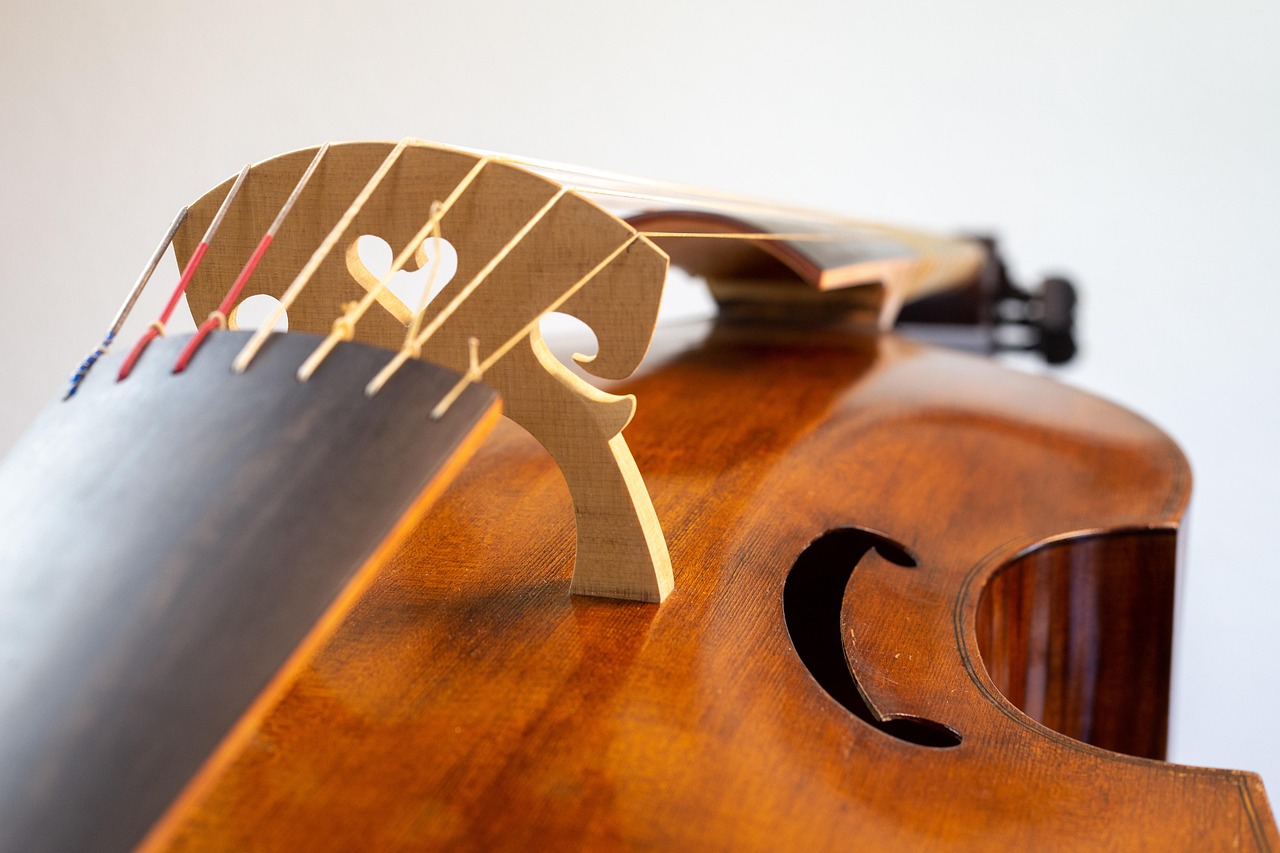
When inspecting your instrument, pay close attention to the shape and placement of the viola da gamba bridge to ensure correct intonation.
For closely related guidance, see 7 string viola da gamba.
The Viola da Gamba in Ensemble and Consort Playing
Consort Literature and Polyphonic Textures
Consort playing forms the cornerstone of viol repertoire, requiring players to balance individual lines within a dense polyphonic fabric. English fantasy literature by composers like William Lawes and John Jenkins presents intricate counterpoint where every instrument shares thematic material equally.
For amateur musicians, participating in viol consorts develops crucial listening skills, requiring players to monitor intonation, rhythmic precision, and dynamic balance across all parts rather than relying on a dominant melody and accompaniment structure.
Balancing Fretboard Intonation in Ensembles
Achieving pure intonation within a viol consort involves coordinating the placement of movable gut frets and adjusting finger pressure on the fingerboard. Because historical tuning systems vary, players must remain flexible when blending with other instruments.
Independent guides recommend regular check-ins using open string references to ensure that frets have not shifted during transport or temperature changes, maintaining accurate harmonic intervals across the entire ensemble.
Continuous Bass Roles and Basso Continuo Practice
The bass viola da gamba frequently serves as a fundamental bass instrument in seventeenth- and eighteenth-century continuo groups. Players realize figured bass lines, providing harmonic support alongside harpsichords, organs, or theorbos.
This role demands a strong grasp of harmonic progressions and voice leading. Amateurs studying continuo must develop the ability to outline chord structures clearly while supporting upper-register solo voices without overpowering them.
Integrating Viols with Modern Orchestral Strings
While historically authentic performance practices generally favor specialized early music ensembles, modern orchestral musicians occasionally encounter parts written for or adapted to the viola da gamba within specific nineteenth- or twentieth-century revival works.
Understanding the unique acoustic properties of the instrument prevents balance issues when historical sections are integrated into broader orchestral textures, ensuring that the delicate timbre of the viol remains audible.

Score Reading and Notation for Gambists
Interpreting Historical French and German Tablatures
Much of the solo repertoire for the viola da gamba, particularly in seventeenth-century France and Germany, was not written in standard staff notation. Instead, it utilized tablature systems that graphically represent finger placements on specific strings and frets.
Amateur musicians learning tablature must master different grid layouts and rhythmic symbols. Independent study guides break down these historical notation formats, enabling players to access rare solo works that would otherwise remain unperformed.
Navigating Alto, Tenor, and Bass Clefs
Ensemble music for viols frequently utilizes historical clefs, including the soprano, alto, and tenor clefs, alongside standard treble and bass notation. These movable C-clefs place middle C on different staff lines depending on the vocal range of the part.
Proficiency in reading multiple clefs is an essential skill for orchestral musicians and listeners who wish to follow ensemble scores directly. Educational guides provide progressive exercises to build fluency across all historical clef configurations.
Ornamentation Conventions in Seventeenth-Century Music
French and English viol music is characterized by intricate ornamentation, including trills, mordents, and specialized bowing flourishes indicated by shorthand symbols. These decorative elements are vital for expressive phrasing and structural articulation.
Rather than treating ornaments as optional extras, independent educational materials teach players how to execute them smoothly within the natural constraints of the underhand bow stroke and gut string response.
Rhythmic Flexibility and Unmeasured Preludes
Unmeasured preludes, common in French solo viol literature, dispense with traditional bar lines and metrical time signatures. Performers interpret floating rhythmic values based on harmonic progressions and rhetorical speech patterns.
This improvisatory approach challenges amateur musicians to develop a refined sense of timing and expressive rubato, moving away from rigid metronomic performance toward a more speech-like delivery of musical phrases.
Maintenance, Care, and Practical Gear for Amateurs
String Selection: Gut Versus Wound Synthetics
Selecting appropriate strings is critical for maintaining the authentic acoustic profile of a viola da gamba. Pure sheep gut strings offer superior warmth and historical accuracy in upper registers, though they remain sensitive to humidity fluctuations.
Many modern amateur players opt for synthetic core strings wound with metal for lower registers to improve tuning stability. Educational guides help players weigh these material choices based on local climate and performance goals.
Adjusting Movable Gut Frets for Intonation
Gut frets tied around the neck of the viol can shift over time due to string tension and handling. Knowing how to slide and retie these frets accurately is a fundamental maintenance skill for every viol player.
Guides outline precise measurement techniques and interval checks using harmonics to ensure that frets are positioned correctly for equal temperament or historical mean-tone tuning systems, depending on the repertoire being performed.
Bridge Placement and Soundpost Adjustments
The bridge and soundpost of a viola da gamba must be precisely aligned to transfer string vibrations efficiently to the instrument’s body. Even minor shifts can deaden the instrument’s response or alter string tension.
Amateurs are advised to perform basic visual inspections regularly while leaving structural adjustments to qualified luthiers. Understanding basic positioning principles helps players identify when professional intervention is necessary.
Climate Control and Wooden Instrument Storage
Because viols are constructed from thin woods with delicate glue joints, they are highly susceptible to damage from extreme humidity and temperature shifts. Proper storage in rigid, insulated cases is essential.
Independent maintenance guides recommend monitoring relative humidity levels in practice rooms and using humidification systems during dry winter months to prevent wood cracking and open seams.
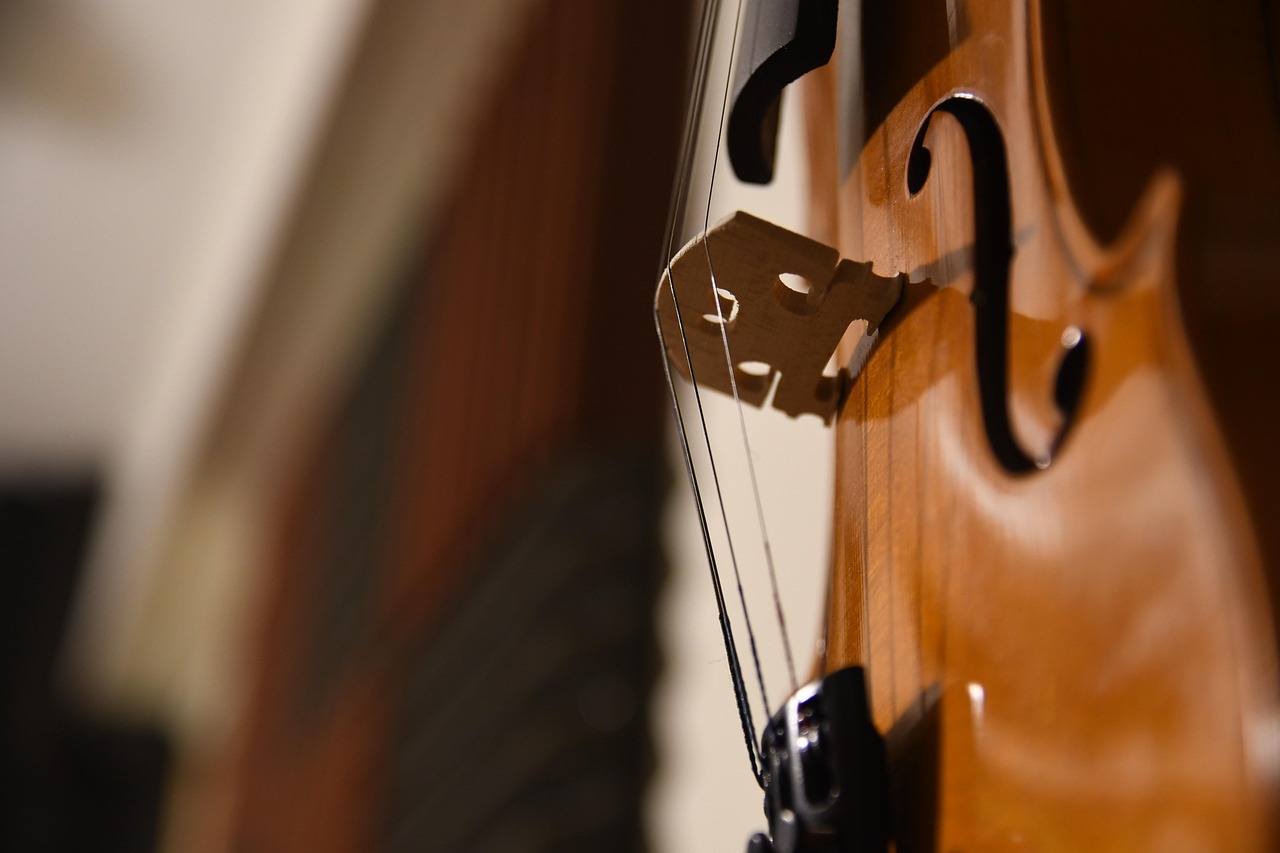
Mastering the proper viola da gamba bow hold requires a relaxed grip and careful attention to wrist flexibility.
Developing Listening Skills for Early Music Audiences
Identifying Timbral Blends in Viol Consorts
For listeners, appreciating early music performed on viols requires cultivating an ear for homogeneous timbral blending. Unlike modern string quartets, where individual instruments project distinct sonic personalities, viol consorts aim for a unified organ-like choir sound.
Educational listener guides encourage audiences to track individual contrapuntal lines as they weave through the homogeneous texture, enhancing engagement with polyphonic Renaissance and Baroque compositions.
Discerning Counterpoint in Polyphonic Repertoire
Polyphonic music features multiple independent melodic voices sounding simultaneously. Following these interwoven lines demands active listening strategies distinct from vertical chord-based analysis.
Listeners can practice by focusing on the entrance of musical subjects in imitative counterpoint, such as in a fantasia or ricercar, noting how different sizes of viols articulate thematic statements across the register.
Appreciating Stylistic Variations Across National Schools
Early music traditions varied markedly across Europe. The restrained, elegant polyphony of the English school contrasts with the decorative, rhetorical freedom of French suites and the expressive counterpoint found in German consort writing.
Independent guides help listeners identify these national characteristics, enriching concert attendance and recorded music exploration by providing clear contextual frameworks for diverse stylistic approaches.
Concert Etiquette and Acoustic Spaces for Early Music
Early music performed on period instruments relies heavily on resonant architectural spaces, such as historic chapels, small concert halls, and salons, which complement the gentle projection of gut-strung instruments.
Understanding the acoustic relationship between performer and hall enhances the listener’s appreciation of subtle dynamic shadings and delicate articulations that might be lost in massive modern auditoriums.
Frequently Asked Questions
What is the main difference between a viola da gamba and a modern cello?
The viola da gamba features frets, flat backs, sloping shoulders, and six or seven strings tuned in fourths and thirds, whereas a modern cello has no frets, curved backs, rounded shoulders, and four strings tuned in fifths. Additionally, viols are played with an underhand bow grip held between the legs.
Do I need to read tablature to play the viola da gamba?
While standard staff notation is common in ensemble music, reading historical French and German tablature is essential for exploring the core solo repertoire. Tablature provides a direct visual map of finger placements on specific strings and frets, making it an indispensable skill for serious viol students.
How are the frets adjusted on a viola da gamba?
Frets on a viola da gamba are made of tied gut strings wrapped around the neck. Players adjust them by gently sliding the loops along the fingerboard to correct intonation intervals. Precise placement is verified using open string harmonics and octave checks tailored to specific historical tuning systems.
Can the viola da gamba be played in a modern symphony orchestra?
The viola da gamba is rarely included in standard modern symphony orchestras due to its relatively quiet acoustic projection, which is easily overpowered by modern brass and percussion. It is primarily reserved for specialized early music consorts, chamber ensembles, and historical performance practice projects.
What type of bow is used for playing early viol repertoire?
Early viol repertoire utilizes a convex wooden bow held with an underhand grip, where the player’s fingers directly control hair tension. This design differs from modern violin and cello bows, facilitating natural, speech-like articulation well-suited for Renaissance dance rhythms and polyphonic phrasing.
How should amateur players maintain gut strings on their instrument?
Amateur players should clean gut strings regularly to remove rosin buildup and protect them from sudden humidity changes. Because pure gut strings are sensitive to moisture and temperature shifts, storing the instrument in a stable climate and checking string tension frequently helps preserve tuning stability and tone quality.