Cleaning rosin off violin strings is an essential maintenance task for amateur and professional string players alike. Over time, sticky resin dust flakes off the bow hair and accumulates on the metal windings of the strings, dampening resonance and creating a gritty, scratchy sound.
To remove this residue safely, musicians typically use a clean, dry microfiber cloth or a cloth lightly dampened with a minimal amount of high-purity isopropyl alcohol. Extreme care must be taken to protect the wooden instrument body and traditional varnish from any accidental chemical contact.
Regular wiping prevents heavy caking that can prematurely wear out strings and degrade bow response. By establishing a consistent post-practice cleaning routine, players preserve tone clarity and extend the usable lifespan of their violin strings significantly without risking structural damage.

The Accumulation and Impact of Rosin Residue
What Rosin Is and Why It Hardens
Rosin is a solid resin derived from the sap of various conifer trees, processed to create friction between bow hair and violin strings during musical performance. During daily practice sessions, microscopic dust particles flake off the moving bow hair and settle directly onto the metal windings of each individual string.
Over weeks of continuous playing, this initially loose powder can cake into a stiff, adherent crust. Ambient room humidity, seasonal temperature fluctuations, and natural skin oils interact directly with the accumulated resin, accelerating its transformation into a stubborn protective layer across the active vibrating string length.
Acoustic Consequences of String Build-Up
Heavy rosin caking dramatically alters the acoustic properties of a violin string by affecting the string’s vibrating surface. As the crust thickens over time, it interferes with the string’s vibrating surface and winding texture, which can mute upper overtones and produce a noticeably duller tone.
Furthermore, this uneven physical barrier can disrupt smooth bow contact and tone production. Instead of biting cleanly into the metal winding, the bow hair skips or slides over hardened resin lumps, producing unwanted scratching noises and severely hindering dynamic control during intricate orchestral passages.
Visual Indicators of Heavy Caking
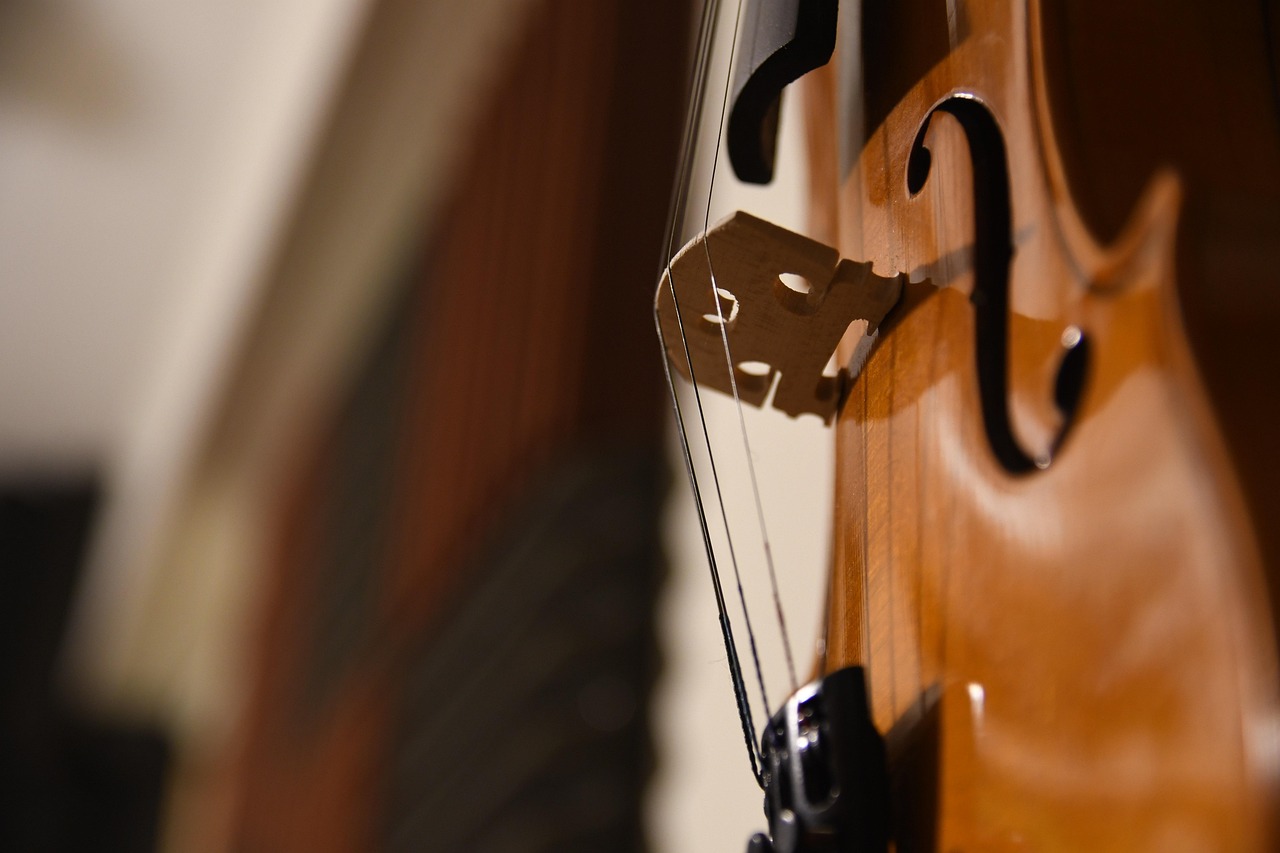
Identifying excessive rosin build-up requires simple visual inspection under adequate lighting conditions. Players should look closely at the section of strings where the bow hair normally makes contact — typically between the end of the fingerboard and the bridge. Inspecting this region regularly reveals developing problems early.
A clean string displays a uniform metallic sheen across its entire vibrating length. In contrast, strings affected by heavy accumulation exhibit dull, chalky white patches or yellowish crusts that contrast sharply with the bright metal windings found nearer the lower tailpiece, signaling an immediate need for careful maintenance.
Similar maintenance techniques are often recommended when you are cleaning double bass strings after an intensive practice session.
For closely related guidance, see violin bow strings made of.
Safe Tools and Materials for Maintenance
Choosing Microfiber and Lint-Free Cloths
Selecting the correct fabric is vital for safe string maintenance routines. Musicians must always use tightly woven, lint-free microfiber cloths designed specifically for delicate musical instrument care rather than standard abrasive household rags or old cotton clothing items that shed loose particles.
Low-quality or loosely woven fabrics can easily snag on fine string windings, leave behind stray fibers, or accidentally scratch the wooden surfaces of the violin body. A dedicated, clean cloth ensures effective debris removal without introducing unwanted chemical or physical contaminants during maintenance tasks.
The Role of Pure Isopropyl Alcohol
Pure isopropyl alcohol serves as an exceptionally effective solvent for dissolving stubborn, hardened rosin deposits safely. Because it evaporates rapidly without leaving oily residues behind, high-concentration alcohol breaks down sticky resin matrices efficiently from metal string surfaces during routine maintenance procedures.
However, players must exercise extreme caution during actual application. Accidental contact between liquid isopropyl alcohol and violin varnish can cause softening, stripping, or discoloration, with the severity depending on the varnish type; spirit varnishes are generally considered more vulnerable than oil varnishes.
Avoiding Harmful Solvents and Abrasives
Amateur musicians must strictly avoid harsh household cleaners, acetone, or abrasive scouring pads when attempting to clean violin strings. These aggressive chemical agents and physical scrubbers risk damaging nearby wooden components, finish, and string windings if mishandled during cleaning attempts.
Some inappropriate liquids may also promote oxidation or corrosion of metal windings, depending on the string material and the substance used. Sticking strictly to approved maintenance supplies guarantees that the instrument remains structurally sound and acoustically balanced over long orchestral rehearsal periods and home practice sessions.

Step-by-Step Cleaning Procedures
Protecting the Violin Body and Fingerboard
Before applying any liquid cleaner near the strings, players should carefully insert a protective business card or small piece of clean cardstock underneath the strings directly above the wooden fingerboard surface to establish a completely safe working zone.
This physical barrier effectively shields the vulnerable instrument top and ebony fingerboard from accidental splashes, liquid drips, or stray solvent transfer during the active cleaning process, reducing the risk of accidental solvent contact with the instrument’s varnished surfaces.
Applying Solvent Sparingly to Cloths
Solvent should never be poured or sprayed directly onto the violin strings while they remain mounted on the instrument bridge and tailpiece. Instead, users must place a single, tiny drop of alcohol onto a designated corner of the microfiber cleaning cloth.
The fabric should feel barely damp rather than wet or dripping. This highly controlled application method ensures that excess liquid cannot migrate toward the tuning pegs, bridge feet, or delicate varnished body seams during the ongoing cleaning procedure.
Gentle Wiping Techniques Along Strings
With the dampened cloth corner held firmly around a single string, the musician should gently slide the fabric back and forth along the active playing zone between the fingerboard end and the wooden bridge.
Excessive downward pressure is unnecessary and can distort the string or strain the bridge. Light, consistent friction loosens and removes the softened rosin, leaving a cleaner metal surface behind after a few careful passes.
Before treating your strings, you might also consider cleaning violin bow hair to remove stubborn sticky residue.
Preventive Habits Between Deep Cleanings
Wiping Strings After Every Practice
The single most effective maintenance habit is wiping down the strings thoroughly with a dry, clean microfiber cloth immediately following every practice session, before packing the violin away into its protective hard storage case.
This quick daily routine removes fresh rosin dust before it has time to absorb ambient moisture and harden into a stubborn crust, drastically reducing the frequency at which harsh chemical solvent cleanings become necessary for overall string longevity.
Managing Excess Hair Application
Many amateur string players apply far too much rosin to their bow hair, mistakenly believing that heavier layers improve acoustic projection. In reality, excessive application generates surplus dust that can contaminate both the strings and the instrument top.
Applying a small number of light passes of rosin to clean bow hair before a rehearsal is generally more than sufficient to maintain adequate string grip without creating unmanageable maintenance burdens over extended time periods.
Proper Case Storage and Environment
Storing the violin in a stable, climate-controlled environment helps prevent accumulated rosin from reacting adversely to sudden temperature swings and humidity spikes inside the enclosed storage case.
Keeping a small, clean barrier cloth draped over the fingerboard inside the closed case also prevents loose airborne particles from settling onto the strings while the instrument rests between orchestral rehearsals and private home practice sessions.
Frequently Asked Questions
How often should violin strings be cleaned of rosin?
Dry wiping with a microfiber cloth should occur after every single practice session. However, chemical or solvent cleaning using isopropyl alcohol is only necessary every few weeks, depending on how heavily the player practices and how much rosin is applied daily.
Over-cleaning with alcohol can dry out nearby fingerboard wood or risk varnish damage if performed too frequently, so players should always rely on visual inspection rather than a rigid calendar schedule to determine maintenance needs.
Can rubbing alcohol damage the violin varnish?
Yes, rubbing alcohol can dissolve, strip, or dull violin varnishes. The degree of risk varies by varnish type — spirit varnishes are generally more vulnerable — but caution is warranted regardless of finish.
This severe chemical risk makes protective cardstock barriers and ultra-sparing cloth dampening mandatory safety practices whenever solvent is introduced anywhere near the delicate instrument body during routine string maintenance tasks.
What should I do if strings still sound dull after cleaning?
If strings remain dull or unresponsive after thorough rosin removal, the strings themselves may have degraded. Wound strings can lose tonal brightness and tuning stability through winding wear, surface contamination, or fatigue of the core material over months of use.
In such cases, replacing the string set is generally the most practical next step to restore tonal brightness and playability.
Can commercial string cleaner liquids be used safely instead of isopropyl alcohol?
Commercial string cleaning products specifically formulated for orchestral instruments are widely available and can be used as an alternative to pure isopropyl alcohol. These specialized formulas are typically designed to break down hardened resin safely while reducing the risk of accidental solvent damage to nearby instrument parts. However, players must always read manufacturer instructions carefully before application, ensuring the liquid is strictly safe for metal string windings and will not creep toward the vulnerable wooden bridge or delicate fingerboard joints during use.
Even when using specialized commercial cleaners, the fundamental application rules remain identical to standard maintenance procedures. Musicians should apply a minimal amount to a clean microfiber cloth rather than spraying the liquid directly onto the instrument. Protecting the wooden top with a stiff cardstock barrier is still strongly recommended to eliminate any possibility of accidental surface marring or finish discoloration during the routine cleaning process.
Does the type of rosin used change how fast residue builds up on strings?
Yes, the specific formulation of rosin directly influences how quickly sticky deposits accumulate on string windings. Dark rosins are generally softer, more pliable, and tackier than light rosins. Rosin choice is influenced by instrument type, climate, and player preference. On violins, softer dark rosins tend to shed heavier, more adhesive dust particles that can cake into stubborn deposits more quickly than harder, lighter-colored formulas.
Lighter rosins are harder and less sticky, producing finer, drier dust that tends to adhere less aggressively to metal surfaces. Understanding these differences can help players anticipate how frequently wiping will be needed, though individual playing habits and application amount also play a significant role.