
A copy of a Stradivarius violin made in Czechoslovakia represents a significant category of European trade instruments that populated regional orchestras, schools, and community ensembles throughout the twentieth century. These instruments are mass-produced or workshop-built replicas rather than authentic Italian masterpieces, yet they frequently offer reliable acoustic properties for amateur musicians.
Understanding the historical background, construction standards, and maintenance requirements of these Czech-made string instruments helps players evaluate their suitability for modern orchestral performance. Independent educational frameworks emphasize practical appraisal over speculative value, ensuring musicians approach vintage trade violins with realistic acoustic and mechanical expectations.
Historical Context of European Trade Violins
The Tradition of Czechoslovakian Luthier Guilds
Regions within the historical borders of Czechoslovakia, particularly around Luby (Schönbach), maintained centuries-old traditions of commercial violin production. Guild networks trained generations of artisans in standardized woodworking and varnishing techniques. Rather than relying on a single master builder, these workshops operated on a division-of-labor model where different workers carved plates, fitted necks, or applied varnishes.
This industrial approach allowed export markets to receive steady shipments of affordable string instruments. While not handmade masterworks, these workshops achieved impressive mechanical consistency, utilizing seasoned European tonewoods native to the surrounding mountainous regions.
Understanding Stradivarius Copy Labeling Practices
Labels inside vintage violins indicating an Antonio Stradivarius model are frequently misinterpreted by modern owners. During the nineteenth and twentieth centuries, printing “Antonius Stradivarius Cremonensis Faciebat Anno [Year]” inside a trade instrument was standard industry practice denoting the design template being copied, not an intentional forgery.
Instruments manufactured in Czechoslovakia often featured secondary factory stamps or paper slips indicating the country of origin, such as “Made in Czechoslovakia,” fulfilling import regulations. Recognizing these commercial labeling conventions prevents unrealistic valuation assumptions while acknowledging the genuine heritage of mid-century European manufacturing.
Materials and Construction of Mid-20th-Century Trade Instruments
Czechoslovakian trade instruments generally feature carved spruce tops and flamed maple backs, sides, and scrolls. While master makers hand-graduated plates for optimal resonance, trade instruments were often machine-carved to a baseline thickness before being hand-finished by workshop apprentices.
The varnish used on these violins ranged from heavy spirit varnishes to softer oil formulations. Over decades, wood settling and natural aging can significantly alter the instrument’s resonance, frequently resulting in a mature, open tone that compares favorably to newly manufactured entry-level instruments.
Assessing Structural Integrity in Vintage European Violins
Evaluating an older trade violin requires careful inspection of the seams, rib structure, and bass bar. Temperature fluctuations and dry indoor climates over decades can cause wood shrinkage, leading to open edge seams or cracks along the top and back plates.
Amateur musicians should consult a professional luthier to check the integrity of the soundpost fit and neck angle. Addressing structural vulnerabilities early preserves the instrument’s longevity and ensures stable tuning under orchestral playing conditions.
For closely related guidance, see violin bow strings made of.
Evaluating String Instruments for Amateur Orchestral Play
Bridge Fitting and Soundpost Adjustments for Tone
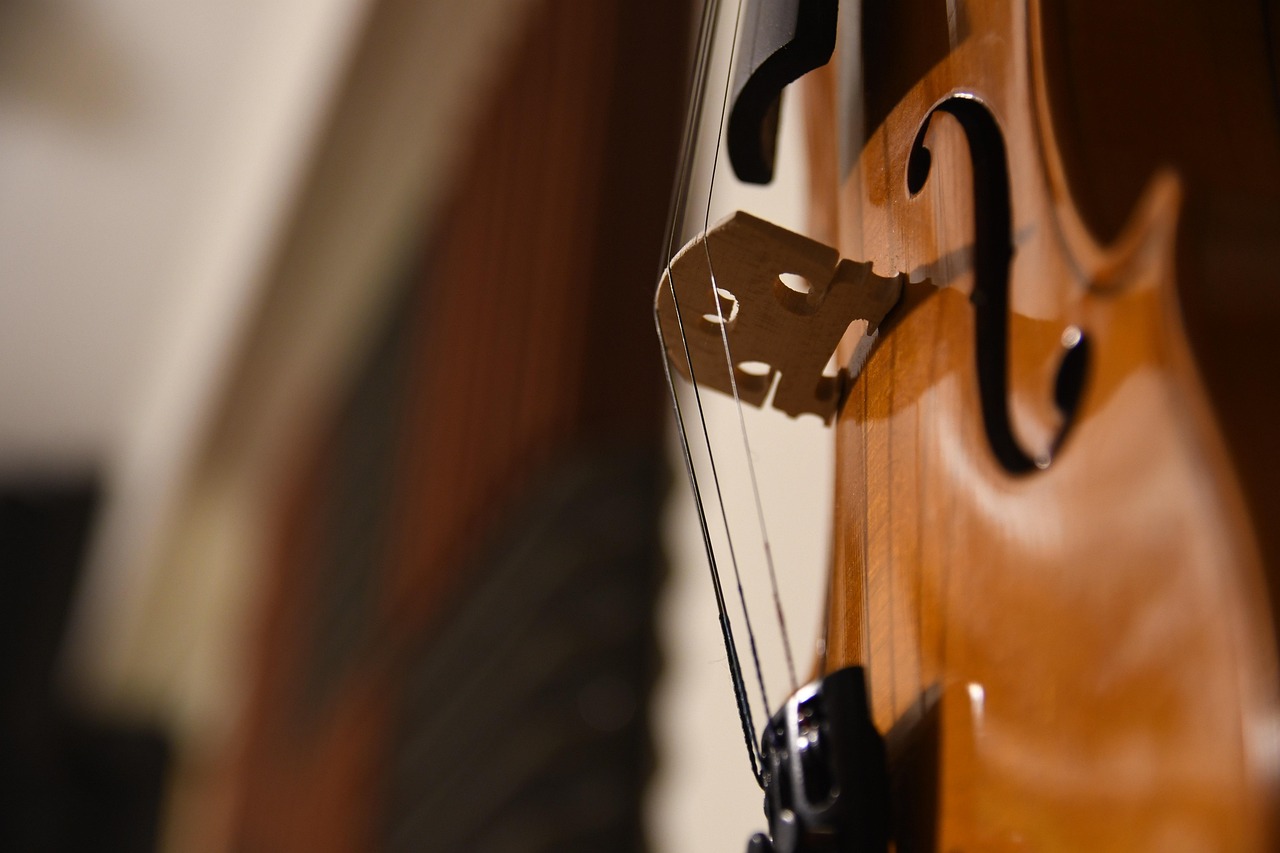
The acoustic performance of a vintage trade violin depends heavily on the precise fitting of its bridge and soundpost. A poorly fitted bridge dampens string vibrations, while an incorrectly positioned soundpost restricts the free movement of the top plate.
Luthiers adjust these components to optimize projection and balance across all four strings. For amateur players, ensuring proper bridge height and string spacing is essential for comfortable intonation and bow clearance during complex ensemble passages.
Peg Box Maintenance and Tuning Stability
Wooden tuning pegs on older instruments frequently swell or shrink with humidity changes, causing slipping or sticking. Properly fitted pegs coated with a balanced peg compound restore smooth tuning control without requiring excessive force.
Alternatively, installing mechanical fine tuners or modern composite pegs can enhance usability for players transitioning to orchestral environments where rapid tuning adjustments are necessary between rehearsal segments.
Selecting Appropriate String Tension for Older Instruments
Older string instruments require careful consideration regarding string tension. High-tension steel strings can exert excessive pressure on the vintage neck and top plate, potentially causing structural distortion over extended periods.
Synthetic core or lower-tension steel strings often provide a warmer, more historically appropriate resonance profile while safeguarding the structural integrity of historical trade violins during intensive daily practice.
Fingerboard Plane and Action Height Considerations
Over decades of play, fingerboards can develop grooves or lose their ideal longitudinal curve, affecting string clearance and shifting precision. Professional planing or replacement ensures a clean playing surface.
Proper action height allows amateur string players to execute clean articulation and double stops without unnecessary physical fatigue. Well-adjusted action is a foundational element for developing reliable orchestral technique.
For deeper insight into maintaining stringed instruments properly, read our guide on string instrument maintenance fundamentals, which covers foundational care for orchestral players.

For closely related guidance, see types of bowing violin.
Woodwind Integration and String Balance in the Orchestra
Tuning Dynamics Between Strings and Woodwinds
Achieving stable intonation across an amateur orchestra requires continuous listening between string sections and woodwind choirs. Strings rely on friction and finger placement, while woodwinds depend on air column resonance that fluctuates with ambient temperature.
String players must learn to match their pitch centers to the stable, sustained tones of flutes, clarinets, and oboes, compensating for natural pitch tendencies during dynamic crescendos and decrescendos.
Blending Timbres in Shared Harmonic Passages
Orchestral texture relies on the seamless blending of contrasting instrumental timbres. When a string section doubles a melody with clarinets or bassoons, bow speed and vibrato width must be modulated to prevent the strings from overpowering the woodwind articulation.
Amateur musicians benefit from active score study to identify which section carries the primary thematic material, adjusting their dynamic output accordingly.
Managing Intonation Shifts Across Temperature Variations
Rehearsal spaces often experience significant temperature shifts as bodies warm the room, causing woodwind instruments to sharpen while string instruments may flatten due to wood compliance and moisture changes.
Regular reference checks against a central tuning pitch ensure the ensemble maintains unified intonation throughout extended rehearsal blocks, preventing gradual pitch drift during demanding movements.
Dynamic Control for Balanced Ensemble Texture
Balancing dynamic levels between delicate woodwind solos and a full string section requires disciplined bow distribution. Players must master controlled micro-dynamics to support inner voices without obscuring prominent thematic statements.
Ensemble listening exercises help musicians calibrate their individual sound output against the broader acoustic footprint of the surrounding orchestral sections.
For closely related guidance, see parts of a violin bridge.
Score Reading Fundamentals for String Players
Navigating Transposing Instruments in the Full Score
Reading a full orchestral score requires string players to understand transposition principles for clarinets, horns, and trumpets. Recognizing that certain parts sound higher or lower than written notation prevents confusion during cueing and cross-section listening.
Amateur musicians who practice basic score reading develop a stronger awareness of harmonic structures, improving their anticipation of entrances and cadential resolutions.
Identifying Counterpoint and Inner Voice Distribution
Orchestral arrangements frequently distribute melodic material across secondary and tertiary voices rather than concentrating exclusively on the first violins. String players must actively locate countermelodies within the texture.
Understanding how inner voices interact with the bassline and principal melody enhances interpretive accuracy and stylistic cohesion across the entire ensemble.
Recognizing C-Clefs in Historical Orchestral Parts
Violas, cellos, and double basses frequently encounter historical performance editions utilizing alto and tenor clefs. Familiarity with C-clefs expands an instrumentalist’s ability to read chamber music and orchestral scores directly from primary sources.
Practicing clef reading in short, structured intervals builds cognitive flexibility, reducing hesitation when encountering unfamiliar repertoire in community orchestra settings.
Following Dynamic Markings Across Instrumental Sections
Comprehensive score awareness allows musicians to contextualize their assigned dynamic markings within the broader orchestral landscape. If a subsidiary line is marked forte while the main theme is marked piano, internal balance adjustments become immediately apparent.
Developing this panoramic listening habit elevates amateur performance from mechanical note-reading to informed musical collaboration.
To further develop your ability to interpret complex arrangements, explore our resource on score reading techniques for amateur musicians, designed to clarify orchestral textures.
Effective Rehearsal Habits and Orchestral Listening
Active Listening Strategies During Tutti Sections
During loud tutti passages, individual musicians often retreat into self-monitoring, losing awareness of the surrounding ensemble. Active listening requires maintaining acoustic awareness of section mates, bass foundations, and brass articulation.
Musicians should practice identifying specific instrumental timbres within complex textures, training the ear to process multi-layered auditory information simultaneously.
Managing Sectional Intonation and Bowing Uniformity
String sections achieve a unified sound through synchronized bowing styles and disciplined intonation adjustments. Following the principal player’s bow distribution ensures consistent articulation across the entire section.
Regular sectional rehearsals provide necessary time to isolate difficult passages, align shifting fingers, and establish uniform phrasing before integrating with the full orchestra.
Interpreting Conductor Gestures and Cueing
Effective rehearsal habits depend on maintaining visual contact with the conductor’s preparatory beats and dynamic cues. Relying solely on auditory feedback often introduces minor timing delays in large performance spaces.
Amateur musicians benefit from practicing peripheral vision techniques, allowing them to read sheet music while simultaneously registering baton velocity and expressive body language.
To deepen your understanding of collaborative ensemble dynamics, read our overview on effective orchestral rehearsal strategies for community players.
Developing Individual Accountability Within the String Section
Every member of a string section shares responsibility for rhythmic precision and stylistic articulation. Assuming that neighboring players will cover technical errors weakens the section’s collective performance.
Cultivating personal accountability through targeted home practice ensures that rehearsals focus on ensemble interpretation rather than foundational note learning.
Frequently Asked Questions
What defines a copy of a Stradivarius violin made in Czechoslovakia?
A copy of a Stradivarius violin made in Czechoslovakia is a commercial trade instrument manufactured in Czech workshops during the nineteenth or twentieth century, utilizing a Stradivarius design template rather than attempting fraudulent forgery.
How can I verify the age and origin of a Czech trade violin?
Verifying age and origin typically involves examining internal factory stamps, paper import labels, wood aging characteristics, and varnish styles, followed by professional appraisal from an experienced luthier specializing in European string instruments.
Are vintage Czechoslovakian trade violins suitable for advanced orchestral play?
Many vintage Czech trade violins possess well-seasoned tonewoods that offer warm, responsive acoustic profiles suitable for community and advanced amateur orchestral settings when properly serviced by a qualified professional.
What maintenance do older string instruments require before joining an orchestra?
Older string instruments require careful inspection of the bridge, soundpost, peg box, fingerboard plane, and seam integrity to ensure stable tuning, structural safety, and optimal acoustic projection under ensemble performance conditions.
How do woodwind and string instruments maintain intonation together?
Maintaining intonation requires continuous active listening between sections, as woodwinds fluctuate with temperature while strings adjust to humidity, necessitating collaborative pitch-matching during rehearsals and performances.
Why is score reading beneficial for amateur orchestral string players?
Score reading helps string players understand transposing parts, inner voices, and harmonic structures, enabling them to contextualize their individual dynamic output and improve overall ensemble balance and timing.