Double bass fifths tuning replaces the traditional orchestral tuning in fourths with intervals tuned a fifth apart, typically utilizing C1, G1, D2, and A2 pitches. This alternative setup alters string tension, fingerboard geometry, and the overall acoustic projection of the instrument within an ensemble setting.
Amateur orchestral musicians exploring this tuning method find expanded lower range capacity and different fingering patterns across the fingerboard. Adopting fifths requires specialized string selection and appropriate bridge and nut adjustments to accommodate varying string thicknesses and physical tension loads.
While championed by modern orchestral players seeking a low C without an extension and soloists utilizing cello-like fingerings, switching to fifths presents distinct ergonomic and technical challenges. These require deliberate practice regimens and thorough score-reading adaptations to navigate symphonic repertoire effectively in orchestral environments.

Mechanics of Fifths Tuning on the Double Bass
String Selection and Tension Dynamics
Fifths tuning demands specialized string gauges designed specifically to handle the extended tension ranges required for C, G, D, and A intervals. Standard fourth-tuning strings are generally not designed for these pitches and may feel too slack or create excessive tension when tuned to a fifth, though outcomes vary with the specific string and target pitch.
Manufacturers produce custom steel or synthetic core strings calibrated for these precise pitches. Players must consult string tension charts carefully to protect the instrument’s top plate and tailpiece from structural stress caused by improper load balancing.
Bridge and Nut Modifications
The differing string diameters and tensions frequently require professional adjustments to both the bridge and the nut. A luthier may need to adjust string slots, bridge curvature, and string heights to ensure clean clearance and even action across all four strings.
Because the C string is lower in pitch than the standard E string and typically requires a thicker core, the nut and bridge slots may need to be widened by a luthier to accommodate it safely. Neglecting these physical modifications often results in buzzing, string binding in the slots, and sluggish acoustic response.
Acoustic Resonance and Projection
Tuning in fifths fundamentally changes how the double bass resonates within an ensemble, often producing a brighter and more penetrating tone. Because the C, G, D, and A open strings share the same pitch classes as the cello’s open strings, and the upper strings of the viola and violin also use G, D, and A (though in higher octaves), the instrument can ring with sympathetic resonance across common orchestral keys.
Orchestral musicians often notice that the instrument blends differently with cellos and low woodwinds. Understanding these acoustic shifts helps players balance their volume effectively without overworking the bow during dense tutti sections.
Transitioning from Standard Fourth Tuning
Relearning Fingerboard Geography
Shifting from fourths to fifths requires abandoning deeply ingrained muscle memory related to standard half-position and whole-step finger patterns. Players must map out entirely new tactile landmarks along the fingerboard to maintain accurate intonation.
Practicing slow scales and arpeggios across the extended interval span helps build the necessary neural pathways. Patience is essential, as the hand must stretch wider or shift more frequently to cover the same scalar distances.
Shift Mechanics and Left-Hand Span
Because adjacent strings are separated by a fifth rather than a fourth, the left hand cannot cover diatonic scale segments across strings without more frequent shifts or modified finger extensions. Players frequently incorporate thumb position earlier on the fingerboard to navigate these wider demands comfortably.
Developing relaxed hand frames prevents repetitive strain injuries during extended rehearsal periods. Conscious monitoring of thumb tension and forearm relaxation ensures sustainable physical endurance when adapting to fifths tuning.
Intonation Habits and Aural Training
Intonation anchors shift dramatically when open strings correspond to C, G, D, and A instead of E, A, D, and G. Musicians must retrain their internal ear to recognize pure fifths and adjust their stopping precision accordingly.
Practicing with drone pitches or electronic tuners helps solidify the new pitch relationships. Listening closely to acoustic beating between harmonic intervals accelerates the adjustment period for orchestral section playing.
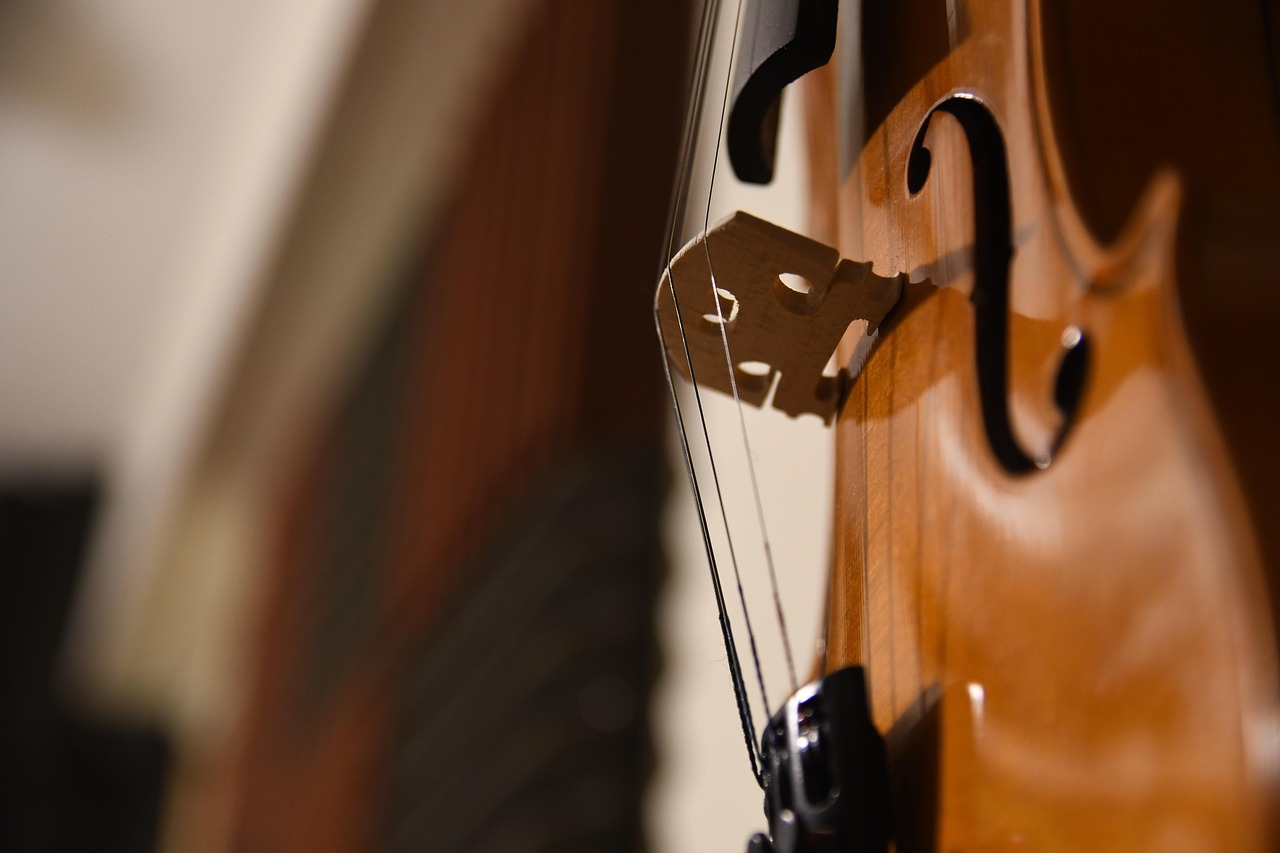
When exploring this method, it is helpful to understand standard double bass tuning to grasp the interval changes fully.
Orchestral Repertoire and Score Reading Adjustments
Interpreting Orchestral Bass Parts
Standard orchestral bass parts are written assuming a four-string instrument tuned in fourths. Players using fifths do not transpose pitches, but they must mentally recalculate fingering and shifting pathways designed for standard fourth-tuning shapes.
Score reading becomes an exercise in identifying idiomatic fifths-tuning passages, especially those utilizing open strings for pedal points. Careful score marking ensures smooth execution during fast-paced symphonic movements.
Utilizing Open Strings as Pedal Points
One of the primary advantages of fifths tuning is the availability of resonant open C, G, D, and A strings. Sustained pedal points that happen to fall on C, G, D, or A can resonate with particular depth when executed on open strings.
Orchestral players can leverage these open strings to create drone effects and maintain a stable foundation in works that call for sustained pedal tones. Integrating open strings efficiently reduces left-hand fatigue during long symphonic movements.
Navigating High-Register Passages
The upper register of the double bass opens up significantly with fifths tuning, allowing for smoother execution of high-lying melodic material. Thumb position technique changes because the underlying interval structure mirrors the cello.
Players can execute wide shifts and complex melodic lines with greater intervallic consistency. This alignment with cello fingering logic simplifies reading transposed cello parts or specialized solo repertoire.
Musicians also encounter distinct challenges when dealing with alternative double bass solo tuning during specific performance requirements.
Ergonomic and Technical Adaptations
Bow Arm Adjustments for Greater String Angles
Subtle differences in bridge arching and string heights can require modifications to bow arm mechanics. Bow distribution across four strings tuned in fifths demands precise control of the sounding point.
Crossing strings efficiently requires clean arm-level adjustments across each string plane. Practicing deliberate string crossings prevents accidental clipping of adjacent strings during rapid articulation.
Posture and Physical Stamina Considerations
Adapting to new physical demands can introduce unexpected muscular tension in the shoulders, neck, and lower back. Maintaining a balanced posture while seated or standing is critical for long-term physical health.
Regular stretching routines targeting the hand, wrist, and forearm mitigate strain caused by altered stretching habits. Musicians should pace their practice sessions during the initial transition phase to avoid injury.
Managing Instrument Ergonomics and Endpin Height
Changes in string tension and overall instrument resonance may require adjustments to endpin length and placement. Finding the optimal endpin angle improves physical balance and left-hand freedom while reducing fatigue during long rehearsals.
A stable instrument setup prevents excessive physical compensation by the player’s body. Ensuring the bass remains balanced during aggressive shifting allows for more reliable technical execution.

String tension adjustments often require familiarizing yourself with the process of changing double bass strings safely and efficiently.
Frequently Asked Questions
Why do some bassists choose fifths tuning over fourths?
Bassists often choose fifths tuning to gain extended lower range access, brighter resonance, and simplified fingering continuity with the cello family. This setup allows for unique acoustic colorings within orchestral contexts.
It also provides more open-string options for specific keys, making certain repertoire — particularly works that emphasize C, G, D, or A tonalities — more idiomatic to execute cleanly without unnecessary shifts.
Is fifths tuning safe for all double basses?
Not all double basses can safely accommodate fifths tuning without professional structural evaluation. The total tension load of custom fifths strings might overstress older or fragile instruments.
Consulting a qualified luthier is essential before restringing an instrument, as bridge modifications, tailpiece adjustments, and top plate evaluations are frequently required to prevent damage.
How long does it take to transition fully to fifths tuning?
The transition timeline varies depending on the player’s experience level, daily practice dedication, and familiarity with alternative fingerboard geometries. Most orchestral musicians require several months of consistent practice.
Developing fluent reading and reliable intonation habits takes patience, starting with fundamental scale work before tackling complex symphonic repertoire in rehearsals.
How does fifths tuning impact intonation blending within the orchestra's string section?
Tuning in fifths alters how a double bass blends with cellos, violas, and violins. The open strings share pitch classes with the upper string family, which can produce sympathetic resonance in certain keys, but whether this results in cleaner harmonic reinforcement depends on context, temperament, and the specific passage.
However, because other section bassists usually play instruments tuned in fourths, amateur players using fifths must listen intently across the bass section to ensure coherent articulation and balance. Pure acoustic fifth intervals sound distinct from equal-tempered keyboard pitches, requiring players to make continuous micro-adjustments in intonation based on the shifting harmonic context of the symphonic repertoire during rehearsal and performance sessions.
Do fifths-tuned basses require different orchestral score-reading strategies for standard parts?
Playing with fifths tuning requires amateur musicians to mentally reframe standard double bass parts, which are conventionally notated assuming fourths tuning. Since double bass parts are conventionally notated an octave higher than they sound, shifting to C, G, D, and A open strings forces players to recalculate open-string pedal points and shift locations instantly across complex symphonic works in orchestral settings.
Consequently, score reading transforms into an active translation process rather than passive reading. Musicians frequently annotate their rehearsal folders with specific fingering guides and alternative positions to navigate rapid chromatic passages smoothly, ensuring they avoid errors stemming from muscle memory built solely for traditional fourth-based fingerboard geometries during demanding symphonic performances.
Can implementing double bass fifths tuning be effectively utilized on both four-string and five-string instruments?
Implementing double bass fifths tuning is most commonly applied to four-string instruments utilizing C1, G1, D2, and A2 pitches, which extends below the traditional four-string bottom E to provide a low C while expanding upper fingerboard accessibility. Adapting a five-string instrument to fifths is considerably more complex and rarely encountered within standard amateur orchestral environments, regional ensembles, and community orchestras.
On a conventional four-string bass tuned in fourths, a mechanical extension fitted to the E string can provide access to pitches as low as C; five-string instruments instead add a fifth string, commonly tuned to low B, for extended range. Adding a fifth string and tuning all five in fifths creates additional string tension and fingerboard span challenges that vary with the specific instrument and string choice. Many luthiers urge caution with five-string fifths conversions, as the additional tension and span demands vary considerably with the instrument; custom string sets and hardware evaluation are typically required before attempting such a setup.
How does fifths tuning influence the orchestral bassist's interaction with woodwind sections?
Fifths tuning can affect how the double bass blends with low woodwinds like bassoons and contrabassoons, with some players reporting a brighter or more projecting tone, though the degree of change depends on string choice, bow placement, and instrument. Because open strings produce prominent overtones, the bass may contribute a resonant harmonic foundation alongside woodwind articulation in sustained passages, with the degree of blend varying by dynamic level, register, and bow placement.
Amateur bassists must remain mindful of their dynamic balance during quieter ensemble movements. Depending on string type and bow placement, a fifths-tuned bass may project more prominently in some registers, so players should monitor their dynamic balance and adjust bowing pressure and sounding point as needed to maintain a cohesive orchestral blend.