The key signature of C minor contains three flats: B-flat, E-flat, and A-flat. As a foundational minor key in orchestral literature, it provides a stable framework that has historically conveyed deep emotional gravity, solemnity, and dramatic intensity.
For amateur orchestral musicians and score readers, navigating C minor requires a solid understanding of its scale variants, idiomatic fingerings across instrument families, and specific harmonic tendencies. Recognizing these elements improves intonation, ensemble balance, and overall rehearsal efficiency.
This educational guide examines the structural, instrumental, and analytical aspects of C minor in an orchestral context. By exploring string mechanics, woodwind logistics, and score-reading strategies, players and listeners can better engage with standard symphonic repertoire.

Tonal Architecture and Harmonic Structure
The Three Minor Scales
C minor utilizes three distinct scale forms to serve different harmonic and melodic functions within a composition. The natural minor scale follows the standard key signature without alterations, providing a diatonic foundation for modal passages.
The harmonic minor raises the seventh degree, B-natural, to create a strong leading tone that resolves upward to C. The melodic minor raises both the sixth and seventh degrees ascending, while typically descending in natural form to smooth out voice leading.
Relative and Parallel Keys
The relative major of C minor is E-flat major, sharing the exact key signature of three flats. Orchestral works frequently modulate between these two keys, exploiting their structural kinship while contrasting dark minor moods with brighter major resolutions.
The parallel major is C major, sharing the same tonic note but possessing a radically different key signature of no sharps or flats. Shifting between C minor and C major is a common compositional device used to alter emotional atmosphere rapidly.
Core Triads and Chord Progressions
The tonic chord in C minor consists of C, E-flat, and G, establishing the primary tonal center. Composers frequently reinforce this center using dominant chords built on G, often featuring the raised leading tone B to maximize harmonic tension.
Subdominant harmonies like F minor play a crucial role in expanding phrases away from the tonic. Understanding these fundamental chord progressions helps players anticipate cadential points and adjust their balance dynamically during rehearsals.
For closely related guidance, see key of g signature.
String Section Mechanics and Fingerboard Geography
Violin and Viola Intonation Challenges
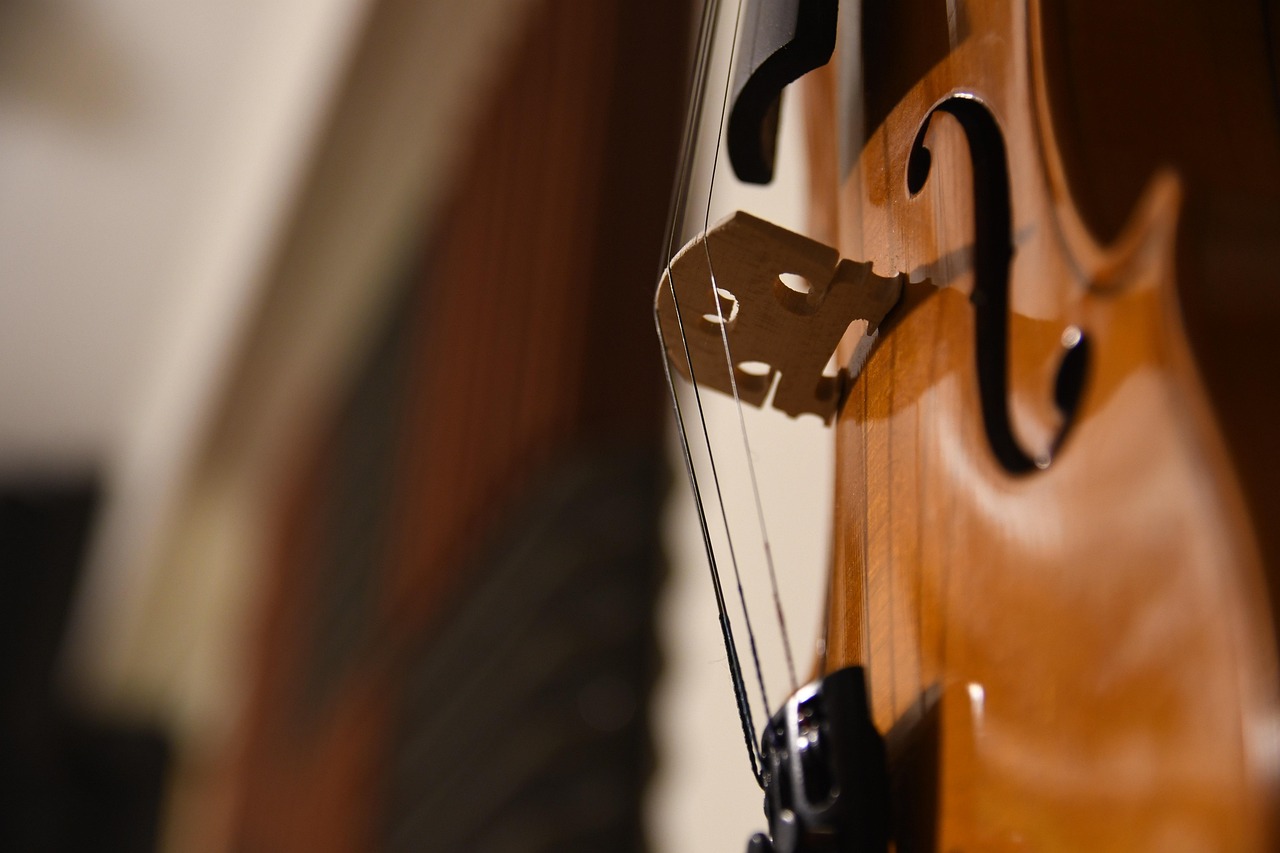
Violinists and violists playing in C minor must manage finger patterns that shift dynamically due to the shifting leading tone. The presence of A-flat requires a low first finger on the G string, while E-flat and B-flat require lowered finger placements across the upper strings.
Because the leading tone B-natural sits a tight half step below C (such as a high second finger resolving to third finger on the G string), string players must constantly adjust their intonation based on whether a passage uses natural or harmonic minor configurations.
Cello and Double Bass Shifts
Cellists encounter comfortable lower-register patterns on the C and G strings, though A-flat and E-flat demand precise thumb position work in higher registers. Double bassists utilize half-position and first-position shifts frequently to cover these flat-heavy keys.
Orchestral bass sections must carefully coordinate their bowing and shifting to maintain a rich, resonant foundation. Intonation discrepancies between low cellos and basses can quickly muddy the overall orchestral texture.
Bowing Articulations in Minor Keys
C minor repertoire often demands aggressive, driving bowing articulations such as heavy martele or rapid spiccato. These strokes help project the dramatic character typical of symphonic works written in this key.
String players should ensure that bow distribution remains balanced across sustained minor-mode phrases. Maintaining uniform bow speed prevents the natural decay of flat-heavy notes from sounding unanchored or sluggish.
For closely related guidance, see g minor key signature bass clef.
Woodwind Intonation and Fingerings
Flute and Oboe Mechanisms
Flutes handle the three flats of C minor with straightforward finger combinations, though high-register passages require careful breath support to keep flat notes from dropping in pitch. Oboes face inherent intonation tendencies on A-flat and E-flat keys.
Oboists must use auxiliary venting or half-holing techniques on certain notes to stabilize pitch against the rest of the woodwind section. Collaborative tuning during warm-ups is essential for managing these specific instrument quirks.
Clarinet Transposition Realities
B-flat clarinets playing in concert C minor read their parts in D minor, which has a key signature of one flat (B-flat). In this transposed key, players must readily manage accidental C-sharps whenever the music introduces the harmonic leading tone.
This transposition shift requires mental agility from amateur clarinetists to avoid misreading accidentals. Familiarity with the transposed key signatures prevents common intonation traps common in orchestral tutti sections.
Bassoon Thumb and Key Logistics
Bassoons navigate C minor comfortably due to the instrument’s natural affinity for low flat keys. However, rapid passages in the lower register involving transitions between A-flat and B-natural require coordinated finger work across the boot and long joints.
Amateur bassoonists should isolate tricky technical passages to ensure their left-hand thumb movements remain fluid. Clean execution in the tenor and bass registers provides a solid structural anchor for the woodwind choir.
For closely related guidance, see key signature of b flat.
Score Reading and Orchestral Balance
Transposing Instruments in the Score
Reading a full orchestral score in C minor requires keeping track of multiple transposing instruments simultaneously. Horns in E-flat or C and clarinets in different pitches must be mentally converted to concert pitch for accurate analysis.
Score readers should focus on foundational bass lines and outer voices first to understand the harmonic skeleton. Once the framework is clear, inner voice movements involving secondary flats become much easier to trace.
Balancing Dense Orchestral Textures
C minor orchestrations frequently feature thick, dramatic textures designed to fill large acoustic spaces. Conductors and players must manage dynamic levels carefully so that countermelodies do not get lost beneath heavy brass and percussion.
Woodwinds carrying melodic fragments in flat keys need adequate space to project through string accompaniments. Listening across sections ensures that harmonic details within the minor key structure remain audible to the audience.
Identifying Structural Cadences
Recognizing authentic, plagal, and deceptive cadences in C minor helps listeners follow the narrative arc of a symphonic movement. Cadential arrivals often signal shifts in mood or transitions into secondary key areas like E-flat major.
Amateur musicians benefit from marking these structural milestones in their parts. Anticipating major cadential moments improves ensemble unity and ensures cohesive phrasing throughout the orchestra.

Frequently Asked Questions
Why does C minor sound so dramatic in orchestral literature?
The dramatic quality of C minor stems from a combination of historical precedent and acoustic properties. Master composers like Beethoven utilized its specific flat key signature and relation to C major to explore intense emotional conflict and heroic struggle.
Acoustically, the interplay between the three flat key signatures and various minor scale alterations creates sharp harmonic friction. This inherent tension naturally compels the ear to seek resolution, driving the narrative forward in symphonic works.
How do string players adjust intonation for the leading tone?
String players adjust for the leading tone by playing B-natural slightly higher than an equal-tempered scale might dictate. This high placement creates a stronger gravitational pull toward the tonic note C, sharpening the harmonic resolution.
Because the leading tone changes depending on whether the passage uses harmonic or melodic minor, players must listen actively to their section mates. Constant micro-adjustments ensure unified intonation across violins, violas, and cellos.
What is the difference between natural, harmonic, and melodic minor in practice?
In actual orchestral performance, the three minor forms dictate how accidentals alter the base key signature. The natural minor uses the exact three flats of C minor without modification, creating a softer, modal color.
The harmonic minor introduces raised sevenths for vertical chord stability, while the melodic minor adjusts both the sixth and seventh scale degrees during ascending scalar runs. Composers mix these forms fluidly to balance melodic flow with strong harmonic direction.
How does modulation to the relative major alter orchestral texture and listening focus?
When an orchestral work modulates from the key signature of c minor to its relative major, E-flat major, listeners will notice an immediate and striking brightening of the overall orchestral color. Even though both keys share the identical three-flat key signature, the tonal center shifts decisively to the third scale degree, creating a profound sense of release, optimism, and expanded musical perspective.
For score readers and amateur musicians, this structural shift requires careful tracking of how thematic material is reframed across different instrument sections. Melodies originally stated with tragic gravity in the minor mode take on an expansive quality in the major mode, frequently accompanied by lighter string accompaniments and more transparent woodwind scoring that highlights the new harmonic stability.
What rehearsal strategies help woodwinds manage accidental shifts within C minor passages?
Woodwind players navigating fast-moving accidentals outside the core key signature of c minor often struggle with sudden intonation drops on specific auxiliary notes. Rehearsal efficiency improves significantly when sections isolate complex passages containing raised leading tones or borrowed subdominant flats, practicing them slowly at a reduced dynamic to secure precise finger placement and breath support.
Conductors should encourage musicians to cross-listen with neighboring instrumentalists rather than relying solely on fixed tuning devices during sectional practice. Because woodwind tubes react dynamically to airflow changes when executing intricate flat-heavy finger combinations, active acoustic awareness within the section remains the most reliable method for maintaining a unified and resonant ensemble profile.
How can score readers track secondary voices that use shifting accidentals in C minor scores?
Following inner voices through a dense orchestral score written in the key signature of c minor requires looking well beyond the main outer staves. Secondary countermelodies frequently utilize chromatic passing tones or temporary modal mixtures that temporarily obscure the underlying harmony, making it easy for readers to lose track of the primary thematic voice during complex developmental sections.
To maintain analytical clarity, score readers should systematically isolate middle staves—such as violas, second clarinets, and inner horns—to observe how auxiliary flat and sharp accidentals interact with the fundamental bass line. Tracing these moving inner parts reveals how composers construct sophisticated contrapuntal tension that resolves cleanly at major symphonic cadences and transitional structural moments.