Preparing for a national youth orchestra audition requires meticulous dedication, strategic planning, and access to authoritative instructional materials. Aspiring young musicians dedicate countless hours to refining their technique, studying standard orchestral repertoire, and mastering the subtle nuances of ensemble performance. Whether you play strings, brass, or woodwinds, navigating the competitive landscape of youth orchestra evaluations demands a comprehensive approach that addresses everything from fundamental tone production to complex orchestral literature studies. Selecting the right practice tools can dramatically elevate your preparation and help you stand out to adjudicators who expect both technical precision and deep artistic expression.
In this comprehensive editorial review, we examine a curated selection of specialized books, scores, and guides designed specifically to support musicians on their journey toward orchestral excellence. From foundational warm-ups and ensemble development scores to targeted audition strategies and instrument-specific orchestral literature studies, these resources provide structured pathways for growth. By integrating these professional materials into your daily practice routine, you can systematically address areas such as intonation, blend, balance, phrasing, and articulation, ensuring that your final performance reflects the highest standards of orchestral musicianship.
1. Sound Orchestra Score
Best for young musicians and ensemble directors seeking structured warm-up routines and chorales designed to enhance overall orchestral blend, balance, and intonation.

The Sound Orchestra — Ensemble Development String or Full Orchestra resource provides a robust framework for developing fundamental ensemble skills. Designed to address the core challenges faced by developing musicians, this score focuses heavily on foundational elements that are critical during high-stakes youth orchestra evaluations. Adjudicators listen closely for how well a player blends with their section and maintains pitch stability across dynamic shifts, making structured ensemble warm-ups an indispensable component of daily preparation.
By incorporating targeted chorales and technical exercises, this publication guides performers through the intricacies of ensemble listening. Musicians must learn to adjust their intonation in real-time while balancing their sound against surrounding sections. Utilizing these exercises regularly helps instill the collective discipline required in top-tier youth orchestras, where individual technical proficiency must seamlessly merge with unified group artistry.
Furthermore, the material emphasizes essential musical parameters that often determine audition success. Players working through these pages will find focused attention on phrasing and articulation, helping them move beyond mechanical note-reading into expressive, communicative performance. This dual focus on technical accuracy and stylistic articulation ensures that students are well-prepared for the multifaceted demands of competitive orchestral literature.
What stands out
- Includes structured warm-up exercises and chorales tailored for string or full orchestra settings.
- Specifically designed to improve foundational ensemble elements like blend, balance, and intonation.
- Explicitly incorporates dedicated focus areas for phrasing and articulation.
What to consider
- Focuses heavily on ensemble-wide development rather than solo audition repertoire excerpts.
- Requires access to a full ensemble or group context to fully realize interactive blend and balance exercises.
Overall, this score serves as a powerful foundational tool for developing the listening skills and technical coordination necessary to thrive in an advanced orchestral environment.
2. Orchestra 101 Guide
Best for students stepping into professional orchestral preparation who need foundational guidance on expectations and standards.

Orchestra 101: Audition Preparation and an Introduction to Professional Orchestral Performance bridges the gap between student-level playing and the rigorous standards demanded by professional and national youth ensembles. Preparing for an audition involves far more than simply playing the right notes at the right tempo; it requires an intimate understanding of orchestral traditions, score context, and professional etiquette. This guide walks aspirants through the mental and physical preparations essential for high-pressure performance environments.
Navigating the audition process successfully means understanding what committees look for beyond basic technical competence. This volume provides structural insights into how auditions are conducted, how to approach standard orchestral excerpts, and how to present a polished, professional demeanor. By breaking down the preparation timeline into manageable stages, students can avoid last-minute cramming and build enduring confidence.
For young artists aspiring to secure a chair in a national youth orchestra, mastering the psychological and strategic aspects of auditioning is just as vital as physical instrument mastery. This guide offers a comprehensive roadmap that helps demystify the professional orchestral world, allowing candidates to approach their auditions with clear focus, strategic insight, and a deep appreciation for collaborative ensemble performance.
What stands out
- Offers targeted audition preparation strategies tailored for orchestral settings.
- Introduces foundational concepts of professional orchestral performance standards.
- Helps bridge the gap between student practice habits and high-level ensemble expectations.
What to consider
- Concentrates heavily on preparatory strategies and concepts rather than instrument-specific technique.
- Requires independent application of concepts to individual repertoire pieces.
This guide is an essential companion for any serious musician seeking a structured approach to understanding the philosophy and execution of orchestral auditions.
Related: Discovering the Sounds of Instruments of
3. Winning Audition Book
Best for ambitious musicians looking for expert advice and insider strategies directly from leaders in the orchestral field.
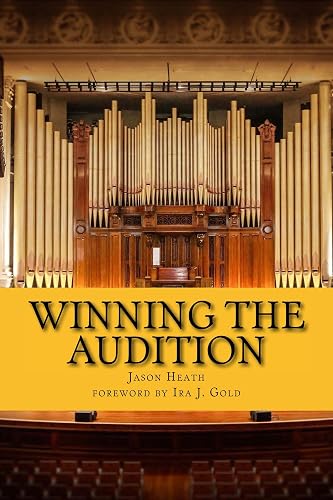
Winning the Audition: Turbocharge Your Orchestral Audition: Advice from Leaders in the Field delivers invaluable wisdom gleaned directly from seasoned professionals who sit on audition committees and lead major orchestras. When preparing for a national youth orchestra audition, gaining perspective from industry veterans can completely transform your approach. This book compiles expert advice designed to give candidates a competitive edge through proven preparation techniques and mental framing strategies.
Auditioning successfully is a skill set distinct from general musicianship. Leaders in the field understand the exact criteria committees use to evaluate candidates within the first few seconds of a performance. This volume addresses common pitfalls, highlights what separates successful candidates from the rest of the applicant pool, and provides actionable advice on how to structure practice sessions for maximum efficiency and retention.
By absorbing the collective insights featured in this text, students can refine their audition checklists, manage performance anxiety, and present their musical interpretations with absolute conviction. Whether you are fine-tuning rhythmic precision, tone consistency, or expressive characterization, the expert guidance found within these pages ensures your preparation aligns with what top-tier evaluators demand.
What stands out
- Features direct advice from recognized leaders and professionals in the orchestral field.
- Designed to turbocharge audition preparation with proven, high-efficiency strategies.
- Addresses the psychological and tactical elements of performing under committee scrutiny.
What to consider
- Relies on generalized leadership advice that must be adapted to individual instrument needs.
- Demands a high degree of self-discipline to implement advanced professional strategies effectively.
An exceptional resource for cutting through guesswork and adopting industry-standard best practices for your upcoming orchestral audition.
Related: Discovering the Biggest Instrument in the
4. Orchestra Guide Book
Best for students seeking a comprehensive exploration of orchestral instrumentation enriched with authentic musical examples.

A Young Person’s Guide to the Instruments of the Orchestra – Including Musical Excerpts offers an engaging and educational exploration into the diverse instrumentation that makes up a full symphonic ensemble. Understanding the unique sonic qualities, ranges, and historical roles of each instrument family is crucial for any musician wishing to excel in a national youth orchestra. When players understand how their specific part interacts with other instrument sections, their overall musical phrasing and ensemble awareness improve dramatically.
This guide stands out by incorporating actual musical excerpts, allowing students to see and hear how master composers write for specific instruments within the orchestral texture. Rather than viewing an audition piece in isolation, young musicians learn to place their excerpts within the broader context of the symphonic score. This holistic understanding enables players to adjust their tone color, dynamics, and articulation to complement the surrounding instrumentation.
For developing artists, deepening familiarity with the entire orchestra fosters greater musicality and sensitivity during collaborative performances. Adjudicators consistently reward candidates who demonstrate an awareness of the overarching score rather than just executing their isolated line. This guide provides the foundational knowledge necessary to achieve that elevated level of musical maturity.
What stands out
- Explores the distinct instruments of the orchestra in comprehensive detail.
- Includes musical excerpts to illustrate practical orchestration and repertoire usage.
- Enhances overall score study and inter-instrumental awareness for young musicians.
What to consider
- Serves primarily as an educational overview rather than a strict solo audition preparation manual.
- Requires students to cross-reference excerpts with their specific audition repertoire list.
A brilliant educational resource that deepens a young musician’s connection to the symphonic tradition and orchestral arrangement.
Related: The Role of the Bass Clarinet
5. Unison Exercises Book
Best for C treble clef instrumentalists focused on building immaculate unison tone, intonation, and technical facility.

150 Original Exercises in Unison for Band or Orchestra: C Treble Clef Instruments is a specialized technical resource designed to target the foundational pillars of clean ensemble playing. For musicians utilizing C treble clef instruments, mastering unison passages is a frequent requirement in both band and orchestral settings. Clean unison playing exposes any discrepancies in intonation, rhythm, and tone quality, making targeted practice in this area non-negotiable for serious audition candidates.
This volume provides 150 original exercises crafted specifically to isolate and strengthen technical control. Practicing unison lines forces musicians to listen intently to their peers, matching vibrato, release points, and dynamic contours. When preparing for a competitive youth orchestra audition, possessing absolute mastery over basic scalar and arpeggiated figures ensures that technical passages within complex orchestral excerpts are executed with flawless clarity.
Working through these systematic exercises helps build muscle memory and finger dexterity while reinforcing fundamental listening habits. As players refine their intonation and tone production through unison practice, their confidence in handling exposed orchestral passages grows exponentially.
What stands out
- Contains 150 original exercises focused on unison playing for band or orchestra.
- Tailored specifically for C treble clef instruments.
- Builds foundational technical facility, finger dexterity, and precise intonation.
What to consider
- Strictly limited to unison technical exercises without full symphonic repertoire excerpts.
- Specific to C treble clef instruments, limiting cross-clef versatility without transposition.
An invaluable technical daily companion for sharpening precision, tone alignment, and fundamental playing mechanics.
6. Orchestra Warm-Ups Book
Best for elementary ensemble directors and students seeking legally reproducible warm-up materials.
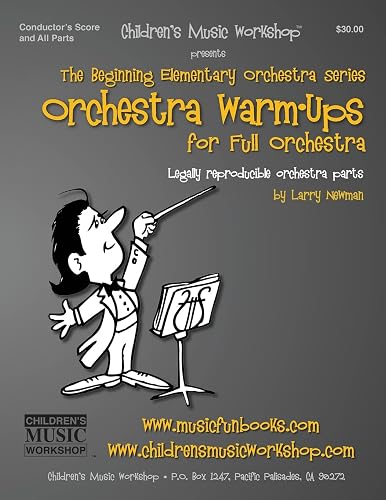
Orchestra Warm-Ups: Legally reproducible orchestra parts for elementary ensemble provides practical, accessible warm-up materials designed to establish healthy daily routines for developing groups. Establishing a consistent warm-up ritual is essential for physical longevity on an instrument and for setting a focused mindset prior to rehearsals or mock auditions. Having access to reproducible parts allows teachers and student leaders to distribute materials efficiently across entire sections.
While targeted toward elementary ensembles, the principles embedded within structured warm-ups remain vital at all stages of musical development. Cultivating good posture, relaxed breathing or bow arm mechanics, and acute listening habits from the earliest stages creates a solid foundation for future national youth orchestra participation. These warm-ups help unify section tone and establish a shared vocabulary for tuning and articulation.
Utilizing flexible, legally reproducible materials removes administrative hurdles for ensemble leaders while ensuring that every student has immediate access to quality developmental exercises. Consistent engagement with structured warm-ups prepares young players for the rigorous physical and mental demands of advanced orchestral performance.
What stands out
- Features legally reproducible orchestra parts suitable for ensemble settings.
- Focuses on establishing structured, healthy orchestral warm-up routines.
- Aids in developing group synchronization and fundamental section cohesion.
What to consider
- Tailored primarily for elementary ensemble levels, which may feel foundational for advanced audition candidates.
- Focuses on general group warm-ups rather than specialized solo excerpt training.
A practical, highly functional resource for group leaders and young players seeking reliable daily warm-up routines.
7. Trumpet Audition Book
Best for trumpet players tackling rigorous orchestral literature studies and advanced performance preparation.
Audition and Performance Preparation for Trumpet, Orchestral Lit.studies-vol. I offers trumpet players a focused, deep-dive resource into the specific demands of orchestral literature. Brass players preparing for competitive auditions face immense scrutiny regarding tone brilliance, articulation clarity, endurance, and stylistic accuracy. This volume centers directly on orchestral literature studies, providing targeted material designed to prepare students for the rigorous repertoire encountered in national youth and professional orchestras.
Trumpet orchestral excerpts often require navigating high registers, delicate muted passages, and bold fanfare motifs within the same audition list. This book provides structured study materials that help players master these diverse stylistic demands. By examining standard orchestral literature in detail, students learn how to interpret historical context and composer intent, ensuring their performance sounds authentic and authoritative.
Preparing with literature-specific studies allows trumpet players to refine their execution of famous symphonic moments. When audition committees evaluate brass candidates, consistency and stylistic fidelity are paramount. This volume provides the focused practice material needed to meet and exceed those exacting standards.
What stands out
- Tailored specifically for trumpet players preparing for orchestral auditions.
- Focuses heavily on orchestral literature studies (Volume I).
- Aids in mastering technical challenges and stylistic nuances specific to brass repertoire.
What to consider
- Strictly focused on trumpet performance, making it unsuitable for other instrument families.
- Centers on advanced orchestral literature studies, requiring a solid foundational technique to begin with.
A specialized, indispensable guide for trumpet players committed to mastering standard orchestral literature and winning their audition seats.
8. Audition Playbook Book
Best for musicians wanting an optimal, strategic planning framework to conquer orchestral audition anxiety and logistics.

Audition Playbook: Optimal Planning for Orchestral Audition Success provides a comprehensive strategic blueprint for organizing every phase of your audition journey. Success in a national youth orchestra audition is rarely the result of talent alone; it requires meticulous planning, timeline management, mental conditioning, and structured mock performances. This playbook offers a step-by-step framework to help candidates eliminate chaos and approach their audition day with supreme calm and preparedness.
From mapping out long-term practice schedules to simulating high-pressure audition environments, this guide covers the operational logistics that often trip up otherwise talented musicians. Candidates learn how to diagnose weak spots in their playing, track progress objectively, and build endurance so that their final run-through is as strong as their first. Strategic planning ensures that physical stamina and mental focus peak exactly when the committee is listening.
By treating audition preparation like a professional campaign, students can replace anxiety with structured routine. The Audition Playbook equips musicians with the tactical tools needed to organize their repertoire, manage performance stress, and deliver a commanding, memorable audition performance.
What stands out
- Provides an optimal strategic planning framework for orchestral auditions.
- Focuses on organizational logistics, timeline management, and preparation workflows.
- Helps musicians manage performance stress and build peak physical and mental endurance.
What to consider
- Focuses on strategic planning and workflow rather than providing instrument-specific musical notes or etudes.
- Requires consistent self-monitoring and discipline to execute the playbook’s recommended planning steps.
An exceptional organizational tool that brings clarity, structure, and strategic confidence to any ambitious orchestral candidate.
Understanding the National Youth Orchestra Audition Process
Preparing for a national youth orchestra audition requires a clear grasp of what evaluators look for during the evaluation process. Unlike standard regional ensembles, national youth orchestras attract the finest young talent from across the country, creating an exceptionally competitive environment. Committees evaluate candidates not only on technical precision—such as clean articulation, accurate intonation, and rhythmic integrity—but also on musicality, phrasing, and the ability to convey stylistic character. Understanding these evaluation criteria allows students to tailor their practice habits toward addressing the specific nuances that capture an adjudicator’s attention.
Moreover, successful audition candidates learn to master the logistics of both recorded preliminary rounds and live final auditions. Developing a reliable practice workflow that simulates the pressure of a real audition is essential. Incorporating mock auditions, studying orchestral scores, and utilizing specialized literature guides ensure that players are mentally and physically prepared to perform at their absolute best under pressure, regardless of the venue or recording environment.
Selecting the Right Repertoire and Etudes
Choosing and mastering the correct repertoire is the cornerstone of any successful orchestral audition strategy. Excerpts selected for youth orchestra evaluations are chosen because they expose fundamental strengths and weaknesses in a player’s technique and musicianship. Students must balance their preparation between technical etudes that build finger dexterity, bowing control, or breath support, and standard orchestral excerpts that demand specific stylistic interpretations. Utilizing targeted exercise books and literature guides helps bridge the gap between technical execution and artistic expression.
When working through assigned excerpts, players should avoid treating the music as a series of isolated mechanical hurdles. Instead, integrating score study and understanding how an individual part fits into the broader orchestral texture allows for more informed phrasing and dynamic choices. Consulting literature-specific studies ensures that stylistic conventions—whether from the classical, romantic, or modern eras—are honored accurately, giving candidates a distinct competitive advantage before the evaluation committee.
Building Daily Warm-Up and Ensemble Habits
Sustainable instrumental health and consistent performance quality rely heavily on establishing disciplined daily warm-up routines. Before tackling complex orchestral excerpts or rapid technical passages, musicians must prepare their muscles, alignment, and listening faculties through structured warm-ups and chorales. Engaging with unison exercises and ensemble development scores trains the ear to monitor intonation, balance, and blend continuously, which are critical skills once seated within a full youth orchestra section.
Establishing these habits early in the preparation cycle prevents injury and builds reliable muscle memory. When practice sessions begin with intentional focus on tone production, flexible articulation, and immaculate pitch centering, the subsequent work on challenging repertoire becomes far more productive. Consistent daily routines anchor the player’s confidence, ensuring that technical reliability remains steadfast even when performing high-stakes audition material.
Mental Conditioning and Performance Stamina
Physical execution is only half the battle when facing a national youth orchestra audition; mental conditioning and performance stamina dictate whether a musician can successfully translate their private practice room success onto the audition stage. Performance anxiety can negatively impact fine motor skills, breath control, and memory recall. Utilizing strategic planning frameworks and mental rehearsal techniques helps candidates build the resilience necessary to maintain composure under intense scrutiny.
Developing stamina requires practicing full run-throughs of audition lists without stopping to correct mistakes, mirroring actual audition conditions. By systematically exposing themselves to simulated pressure, students learn to recover quickly from minor slips and maintain musical momentum. Combining robust mental frameworks with physical endurance training ensures that candidates present a polished, unflappable performance from the first note to the final release.
Leveraging Expert Guidance and Instructional Resources
Navigating the complex world of orchestral auditions is a journey that benefits immensely from expert guidance and specialized instructional materials. Trying to decode the nuances of orchestral performance entirely on one’s own can lead to missed stylistic cues and inefficient practice habits. By drawing upon resources authored by field leaders, pedagogical experts, and experienced ensemble directors, students gain access to proven methodologies that accelerate progress and refine artistic vision.
Integrating these diverse resources—ranging from comprehensive audition playbooks and literature studies to foundational ensemble scores and technical unisons—creates a well-rounded preparation ecosystem. Ambitious young musicians who leverage professional instructional materials equip themselves with the clarity, technical mastery, and artistic depth required to excel in national youth orchestra evaluations and beyond.
Frequently Asked Questions
How early should I begin preparing for a national youth orchestra audition?
Beginning preparation several months in advance is highly recommended to allow adequate time for building technical proficiency, mastering complex orchestral excerpts, and refining musical phrasing. Early preparation also accommodates the recording of preliminary audition videos or the gradual building of performance stamina without undue stress.
Are orchestral excerpts different from standard solo repertoire?
Yes, orchestral excerpts are specific passages taken from symphonic works that highlight how an instrument functions within an ensemble context. Unlike solo repertoire, which showcases individual virtuosity and expressive freedom, excerpts demand strict adherence to conductor cues, ensemble blend, and historical stylistic conventions.
How can I manage performance anxiety during my audition?
Managing audition anxiety involves combining thorough technical preparation with regular mock auditions in front of teachers or peers. Utilizing strategic planning frameworks, practicing mindfulness, and simulating actual audition conditions help desensitize the mind and body to performance pressure.
Why is ensemble listening important for an individual audition?
Even though auditions are often performed individually, adjudicators listen for a candidate’s internalized sense of ensemble awareness. Players who demonstrate acute listening skills regarding intonation, rhythm, phrasing, and balance prove they can integrate seamlessly into a section when selected for the orchestra.
What should I focus on during my daily practice sessions?
A balanced daily practice routine should include foundational warm-ups and intonation chorales, technical studies targeting dexterity and articulation, focused work on current audition excerpts, and complete run-throughs to build performance stamina and mental focus.
Final Thoughts
Securing a coveted spot in a national youth orchestra is a transformative milestone for any aspiring instrumentalist. The journey demands relentless dedication, intellectual curiosity, and the willingness to engage deeply with standard orchestral literature and foundational technique. By utilizing authoritative instructional resources, structured ensemble scores, and proven audition planning strategies, students can transform their preparation from an overwhelming challenge into an organized, rewarding path of artistic growth.
Ultimately, the habits formed during audition preparation extend far beyond a single evaluation. The rigorous pursuit of pristine intonation, refined articulation, deep score awareness, and unwavering mental stamina lays a permanent foundation for a lifetime of expressive musicianship. Armed with the right tools, expert guidance, and an unwavering commitment to excellence, young musicians are fully equipped to step onto the stage, share their voice, and thrive within the vibrant world of symphonic performance.