Double bass bridge setup refers to the precise fitting, positioning, and maintenance of the maple structure that transfers string vibrations directly to the instrument top plate.
Proper bridge setup ensures optimal string height, accurate intonation, and balanced acoustic projection across all orchestral registers without straining the instrument structure.
Amateur orchestral musicians benefit from understanding bridge mechanics to recognize when professional adjustments are necessary for comfortable playing and reliable ensemble performance.

Anatomical Components of the Double Bass Bridge
Foot Fit and Belly Contact
The feet of a double bass bridge must be meticulously carved to match the exact curvature of the spruce top plate. Even minor gaps beneath the feet reduce vibrational transfer and destabilize the bridge under high string tension.
A professional luthier uses traditional chalk fitting to ensure complete wood-to-wood contact across the entire surface of both feet. This precision prevents localized pressure points that could crack the delicate belly wood during heavy orchestral playing.
Heart, Kidneys, and Cutting Details
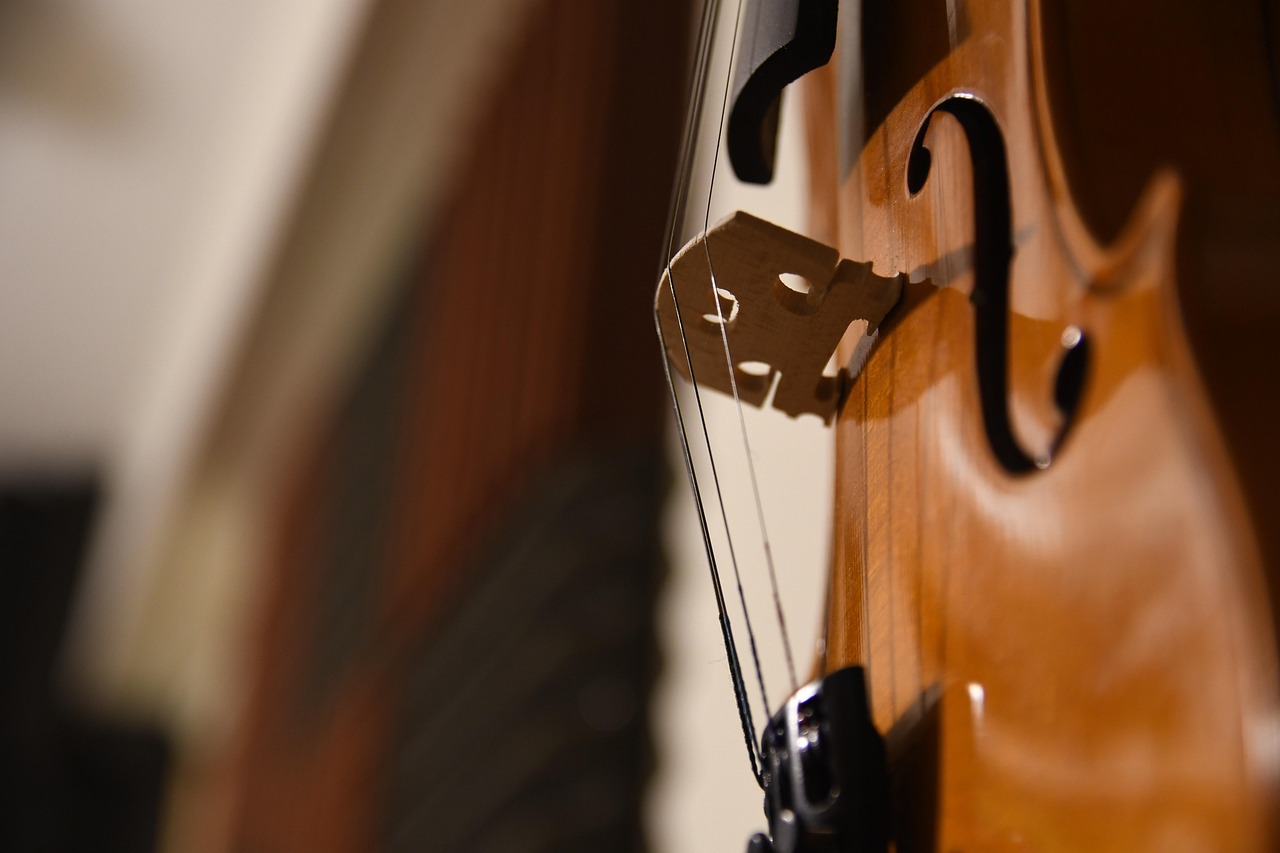
The open spaces carved into the bridge, traditionally called the heart and kidneys, are not merely decorative elements. These cutouts tune the mechanical flexibility of the bridge, allowing the upper section to sway efficiently with string movement.
The thickness of the waist and the mass distribution around these structural openings dictate how much high-frequency damping occurs. Master makers adjust these specific proportions carefully to balance brightness and warmth in the overall instrument tone.
Adjusters and Height Wheels
Many modern double bass bridges incorporate metal or wooden height adjusters embedded directly into the legs. These threaded wheels allow players or technicians to modify string action quickly to accommodate seasonal humidity changes throughout the year.
While convenient, adjusters introduce secondary materials that can slightly alter acoustic transmission. Maintaining clean threads and ensuring solid contact between the adjuster and the upper leg preserves optimal sound clarity during performances.
For closely related guidance, see upright bass bridge setup.
Geometric Alignment and String Spacing
Fingerboard Projection and Overstand
Fingerboard projection refers to the angle and height of the fingerboard relative to the instrument belly, which dictates the required bridge height to achieve proper string action. Correct bridge height prevents string buzzing while maintaining a manageable playing action for the left hand.
If the bridge is cut too tall for the projection, the increased downward force stresses the top plate and makes stopping notes physically exhausting. Conversely, a low bridge causes the strings to slap against the fingerboard during forceful orchestral tutti passages.
Lateral Centering and Tailpiece Alignment
The bridge must stand precisely centered between the f-holes, aligning with the acoustic center of the instrument body. Misalignment creates uneven downward loading over the bass bar and soundpost, impairing the balanced vibration of the top plate during bowing.
Additionally, the strings must run straight from the tailpiece slots across the bridge crown to the nut. Any lateral pull from a misaligned tailpiece can gradually drag the bridge out of its vertical stance during tuning.
String Spacing at the Crown
The distance between individual strings at the bridge crown must match the player’s technical needs and the physical width of the fingerboard. Equal spacing ensures comfortable bow clearance across the E, A, D, and G strings.
If the strings are spaced too closely, accidental cross-string bowing becomes frequent during complex orchestral works. If spaced too widely, reaching the outer strings requires awkward physical adjustments from the right arm and hand.
For closely related guidance, see double bass bow hair.
Pressure Dynamics and Instrument Stability
Downward Force and Top Plate Tension
A double bass bridge withstands immense downward pressure generated by the high tension of thick steel or synthetic strings. This force presses the feet firmly against the spruce top, while the soundpost inside transmits vibration to the back plate and provides structural support.
The top plate relies on the internal bass bar beneath it to distribute this concentrated load safely. An improperly positioned bridge can overload localized areas of the belly, risking structural warping or acoustic choking.
Friction Points at the Notch
The string notches carved into the top of the bridge experience significant friction during tuning and temperature fluctuations. If these grooves are cut too deep or lack proper lubrication, strings can stick rather than slide freely.
Sticking strings cause sudden, unexpected jumps in pitch while tuning, which can jerk the bridge forward dangerously. Applying soft graphite to the notches allows smooth movement and protects the wood from premature wear.
Shifts Caused by Tuning and Weather
Seasonal shifts in relative humidity cause the wood of the double bass to expand and contract, altering the angle and fit of the bridge. As players tune their instruments, the friction of the strings naturally pulls the bridge forward.
Musicians must regularly inspect the bridge stance to catch leaning before it causes a structural collapse. Routine observation and prompt correction prevent sudden failures during rehearsals or public concerts.
For closely related guidance, see bach double bass solo.
Maintenance, Adjustment, and Safety Protocols
Monitoring Tilt During Tuning
Every time a double bass is tuned, the tension changes encourage the bridge to tilt forward. Players should develop the habit of checking the back profile of the bridge relative to the top plate after every tuning session.
The back face of the bridge must remain perpendicular to the surface of the top plate — that is, standing vertically rather than leaning toward the fingerboard. Correcting a slight lean early requires only gentle hand pressure, whereas a severely warped bridge demands professional replacement.
Lubrication of String Notches
Routine maintenance includes lubricating the string notches during string changes to reduce abrasive friction. A soft graphite pencil provides an effective dry lubricant that does not attract destructive dirt or sticky rosin dust.
Care must be taken not to deepen the notches while applying graphite or cleaning the wood slots. Maintaining the correct slot depth ensures the strings remain secure without pinching or causing unwanted string buzzing.
Professional Luthier Interventions
Major structural alterations, such as lowering overall bridge height, carving new feet, or repairing a warped frame, require specialized luthier tools and expertise. Attempting structural modifications without training risks ruining an expensive bridge.
A professional workshop possesses the specialized knives and shaping plates needed to maintain the structural integrity and acoustic balance of the instrument during any significant bridge work or seasonal restoration.

Frequently Asked Questions
How often should a double bass bridge be checked by a professional?
An orchestral double bass bridge should be inspected by a qualified luthier at least once a year, ideally during seasonal climate transitions. Professional evaluation catches early signs of warping, foot lifting, or improper string height before they impact playability.
Regular checkups ensure that the internal soundpost remains in optimal position relative to the bridge feet. This routine maintenance preserves the instrument’s tonal richness and structural safety across demanding orchestral concert seasons.
What causes a double bass bridge to warp or lean forward?
The primary cause of a bridge leaning forward is the continuous frictional pull of the strings during tuning routines. As tension increases and decreases, the top of the bridge is gradually dragged toward the fingerboard.
Environmental humidity fluctuations also soften and warp the maple fibers over time. Keeping the string notches properly lubricated and regularly straightening the bridge prevents permanent structural deformation and costly repairs.
Can I safely adjust the bridge height myself using the adjusters?
Players with adjuster wheels can make minor height modifications, provided they follow proper safety protocols. For larger height changes, reducing string tension before turning the wheels is advisable to avoid stressing the threads or the bridge; follow the adjuster manufacturer’s guidance, as minor turns are sometimes made under normal tension.
If the adjusters are stiff, rusted, or if the instrument lacks mechanical adjusters entirely, all height modifications must be left to a professional luthier to avoid cracking the fragile instrument top plate.
How do different string materials influence the downward force on a double bass bridge?
Steel-core orchestral strings often exert higher tension than many flexible synthetic alternatives, though tension varies considerably by brand, gauge, and tuning; some gut strings also run at high tension. This elevated tension increases the downward vertical pressure driving the bridge feet directly into the spruce top plate. Amateur players upgrading to heavy-gauge steel strings should always consult a professional luthier to ensure the bridge profile and internal bass bar can adequately handle the additional structural load without choking the acoustic voice or warping the maple structure.
Conversely, lower-tension synthetic or hybrid strings reduce the physical stress on the instrument body. While this makes the double bass feel more responsive and comfortable under the left hand during long rehearsals, it may slightly decrease maximum volume projection in large concert halls. Understanding these mechanical trade-offs helps musicians select string gauges that harmonize perfectly with their existing bridge geometry and orchestral performance environment.
What are the acoustic signs that a bridge foot has lost full contact with the instrument top plate?
When a bridge foot loses complete wood-to-wood contact with the spruce belly, the instrument often produces a thin, nasal, or hollow tone. High frequencies may become harsh and scratchy under the bow, while the fundamental low register loses its warm resonance and core focus. Players might notice that the double bass feels less responsive, requiring excessive bowing effort to project sound across an orchestra section.
Additionally, minor gaps beneath the feet frequently generate a subtle, high-pitched buzz or rattle when playing specific open strings or loud tutti passages. If the acoustic projection suddenly drops or the tone becomes unbalanced across the register, a luthier should inspect the foot fit using traditional chalk-fitting techniques to restore optimal vibrational energy transfer.
How can an orchestral musician safely correct a minor bridge lean during rehearsal breaks?
If a double bass bridge develops a slight forward tilt, a musician can often correct it during a break by taking deliberate safety precautions. First, reduce string tension slightly across the instrument to lessen the downward pressure on the maple crown. Stand the instrument securely against your body, grasp the upper waist of the bridge with both hands, and gently ease the top backward toward the tailpiece while keeping the feet firmly seated in their fitted position.
Never attempt to yank or force a bridge upright under full tuning tension, as this risks snapping the maple structure or gouging the top plate. If the feet shift out of position or if the lean is caused by permanent warping in the maple, abandon manual adjustment immediately and seek professional workshop assistance.
Why do metal or wooden height adjusters alter the acoustic resonance of a double bass?
Metal or wooden height adjusters introduce a structural break in the continuous grain of the bridge legs, altering how mechanical vibrations travel downward. Hard brass or aluminum components create a structural break in the wood pathway, and some players report subtle tonal differences, though the nature and degree of any effect vary with the instrument and adjuster design. Because these mechanical wheels interrupt the natural wood pathway, some purists prefer solid, unadjusted bridges for maximum acoustic purity.
Despite minor tonal compromises, adjusters remain invaluable for orchestral players facing extreme seasonal climate shifts. To minimize acoustic damping, players should ensure the threaded insert remains tightly seated inside the leg wood. Keeping the internal metal components clean and corrosion-free maintains the best possible vibrational continuity between the crown and the instrument belly.